

An indigo, navy, or black Japanese-style jacket often becomes more personal with wear. The fabric may soften, folds can become more visible, and areas that receive regular contact may gradually lighten.
Some color change is a normal part of wearing dark clothing. However, uncontrolled dye loss, patchy fading, shrinkage, and color transfer are not always unavoidable. Many of these problems are influenced by water temperature, detergent, agitation, drying conditions, and how the jacket is stored.
The right care routine depends on the specific garment. A lightweight cotton haori will not necessarily require the same treatment as a lined jacket, a denim noragi, or a padded hanten. Indigo-dyed fabric can also behave differently from fabric colored with other types of dark dye.
This guide provides a practical starting point for washing and drying dark Japanese-style jackets without treating every dark garment as if it were identical.
Begin with the Care Label
Always read the care label before washing the jacket.
The color alone does not determine the correct cleaning method. A dark jacket may contain:
-
Cotton, linen, denim, polyester, or a fiber blend
-
A lining made from a different material
-
Padding or insulation
-
Embroidery or printed decoration
-
Decorative cords or ties
-
Metal fasteners
-
Fabric that has not been preshrunk
-
Dye that is more likely to transfer when wet
The care label may recommend machine washing, hand washing, professional cleaning, or a specific water temperature. These instructions should take priority over general advice.
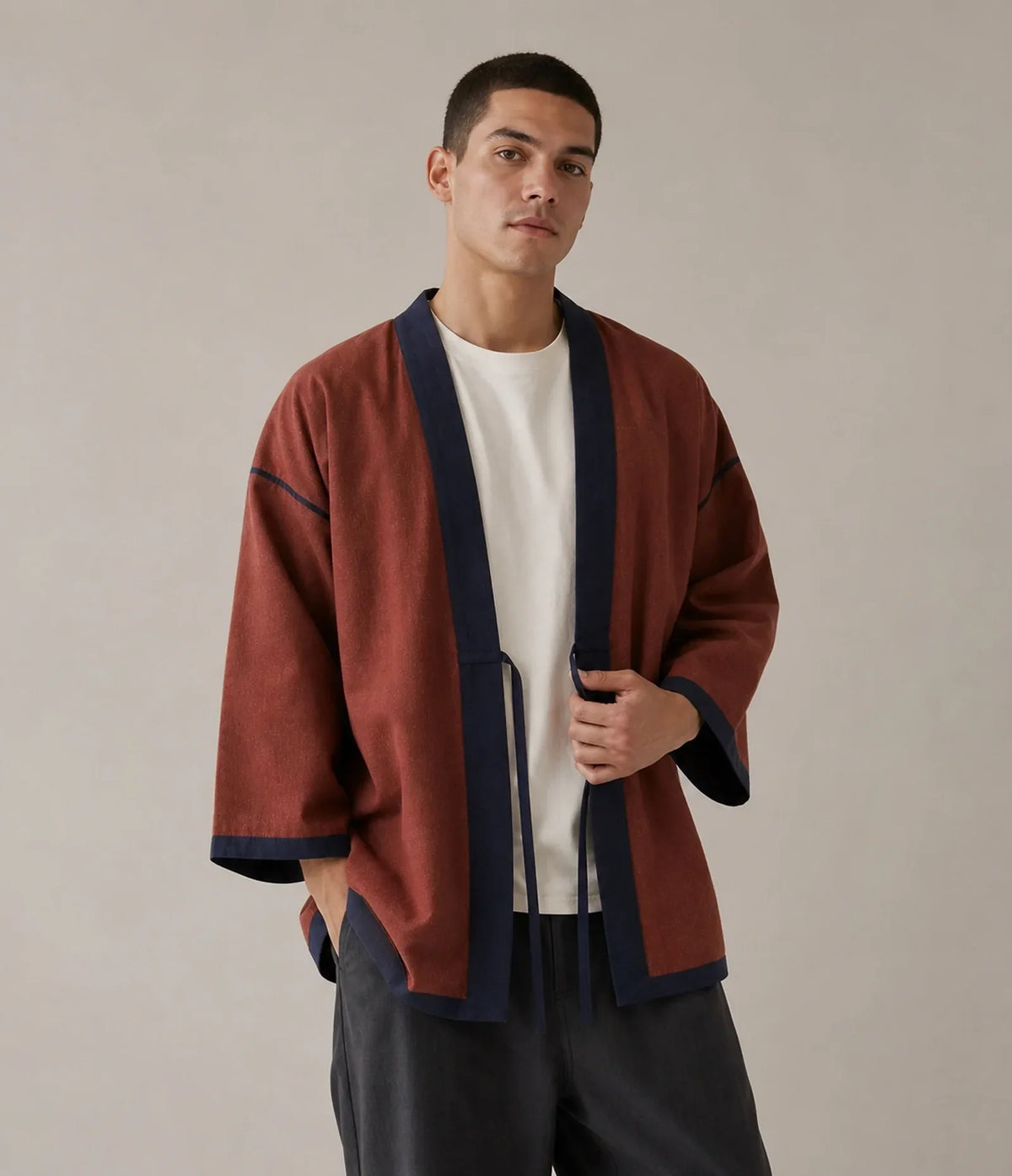
If you own a dark-dyed Seapoom jacket, follow the label attached to that particular garment rather than assuming that every indigo, navy, or black jacket can be washed in the same way.
When the label is missing or unreadable, cool water, minimal agitation, separate washing, and shaded air drying are generally cautious choices. They cannot guarantee a safe result for every construction or dye.
Indigo and Dark Dye Are Not the Same Thing
The words “indigo,” “navy,” and “dark blue” are sometimes used loosely in product descriptions, but they do not always describe the same dyeing process.
A fabric can have an indigo-like color without being dyed with indigo. It may use another dye selected to produce a similar shade. Conversely, genuine indigo-dyed fabric can vary widely in depth, texture, and colorfastness.
Some indigo-dyed textiles release surface color through friction. This is often called crocking. Color may transfer to hands, shirts, bags, furniture, or other fabrics even when the garment is dry.
Other dark garments release more color in water than through dry rubbing. Some are highly colorfast from the beginning, while others continue to change through many washes.
Because appearance alone cannot reveal exactly how a fabric will behave, observe the garment rather than relying only on its color name.
Is Fading Always a Problem?
Not necessarily.
Gradual fading can give a dark jacket visual depth. Elbows, sleeve edges, pocket openings, seams, and folds may lighten first because they experience more movement and friction.
This type of wear can be appealing when it develops naturally and evenly. It records how the garment has been used.
Unwanted fading is different. It may appear as:
-
Pale detergent marks
-
Uneven streaks from concentrated cleaning products
-
One sun-bleached shoulder
-
A light ring around a spot-cleaned area
-
Patchy color loss from aggressive rubbing
-
A jacket and matching trousers fading at different rates
-
Strong creases set by a crowded washing machine
Good care does not keep a dark jacket looking completely new forever. It helps the color change in a more controlled and balanced way.
Check for Color Transfer Before the First Wash
If you are unsure whether the jacket will release dye, perform a small test.
Dampen a clean white cloth with cool water and press it gently against an inconspicuous area, such as the inside of a hem or seam allowance. Do not scrub.
If noticeable color transfers to the cloth, assume that the jacket may also release dye during washing or wear.
This test does not predict every possible result. A garment may behave differently during a full wash, and dry friction can produce transfer even when a damp test shows little color.
Nevertheless, the test can help you decide whether to:
-
Wash the jacket separately
-
Avoid pale upholstery
-
Wear a darker base layer
-
Protect light-colored bags
-
Handle the garment carefully when wet
Should You Wash a Dark Jacket Before Wearing It?
Not automatically.
Some people wash new dark clothing to remove excess surface dye or finishing residue. However, washing also begins the garment’s fading process and may affect its size or texture.
If the care label recommends washing before use, follow that direction. Otherwise, consider the garment’s condition and intended use.
A first wash may be helpful when:
-
The fabric transfers a significant amount of color
-
The garment has a strong manufacturing or storage odor
-
The label specifically advises washing before wear
-
You need to confirm how the garment responds before regular use
You may prefer to wait when:
-
The jacket is clean and odor-free
-
You want to retain its original dark appearance
-
The garment has delicate construction
-
The care instructions recommend professional cleaning
If you decide to wash it, treat the first wash as a test. Wash the jacket alone and observe the color of the water, the feel of the fabric, and any change in measurements.
Care Between Washes
A Japanese-style jacket is often worn as an outer layer, so it may not require washing after every use.
Frequent washing can increase friction and color loss. At the same time, leaving sweat, food, oil, or moisture in the fabric for too long can create stains and odors.
After wearing the jacket:
-
Empty the pockets.
-
Shake away loose dust.
-
Hang or lay it in a ventilated place.
-
Allow moisture to evaporate completely.
-
Brush away dry debris with a soft clothing brush.
-
Store it only after it feels dry and fresh.
Avoid spraying perfume, deodorizer, or scented fabric products directly onto dark material. Some liquids can leave marks that become visible after drying.
Prepare the Jacket for Washing
Careful preparation can reduce tangling and uneven abrasion.
Empty Every Pocket
Remove tissues, paper, coins, and other objects. Wet paper can break apart and leave pale fibers across dark fabric.
Inspect the Seams
Look for loose stitching around the collar, shoulders, pockets, cuffs, side seams, and ties. Washing may enlarge an existing opening.
Secure loose threads rather than pulling them.
Remove Detachable Accessories
Take off pins, brooches, detachable cords, and other accessories. Wash removable fabric ties separately only if their care instructions permit it.
Secure Attached Ties
Fasten long ties in a loose bow or place the jacket in a large mesh laundry bag. Do not use a tight knot.
Turn the Jacket Inside Out
Washing inside out can reduce visible friction on the outer surface. It is especially useful for dark cotton, printed fabric, and denim.
This step may limit surface wear, but it cannot prevent all fading.
Keep It Away from Light Colors
Wash a new or untested dark jacket by itself. Later, it may be washed with similar dark items if its care label allows it and color release has become minimal.
Do not rely on the washing process to prevent color transfer to white, cream, pastel, or pale gray garments.
How to Hand-Wash a Dark Japanese-Style Jacket
Hand washing offers control over agitation and soaking time. It may be suitable for lightweight jackets, loosely woven fabric, unfamiliar dyes, or garments labeled for hand washing.
Step 1: Prepare a Clean Basin
Use a basin large enough for the jacket to move freely. Make sure it does not contain residue from bleach or household cleaners.
Fill it with cool or cold water unless the label instructs otherwise.
Step 2: Add a Small Amount of Mild Detergent
Choose a detergent suitable for dark or colored clothing. Mix it into the water before adding the jacket.
Do not pour concentrated detergent directly onto dark fabric. It may create a lighter patch or leave residue that looks like fading.
Step 3: Submerge the Jacket Gently
Lower the jacket into the water and press it down with open hands. Move it slowly through the water without scrubbing, twisting, or kneading it forcefully.
Pay attention to areas that may collect perspiration or oil:
-
The inside of the collar
-
The underarms
-
Sleeve edges
-
Pocket openings
-
The inside of the neckline
Clean these areas with gentle pressing motions.
Step 4: Avoid Long Soaking
Unless the care label recommends soaking, keep the washing period brief. Extended soaking can encourage more dye release and may create uneven results if part of the garment floats above the water.
Do not leave a dark jacket unattended in a basin.
Step 5: Rinse with Cool Water
Drain the wash water and refill the basin. Gently press the fabric to release detergent.
Repeat until the garment no longer feels soapy. The rinse water does not always need to become completely colorless, especially during an early wash, but heavy continuing dye release should be treated cautiously.
Step 6: Press Out Water
Support the jacket with both hands when lifting it. Wet fabric can be heavy.
Press out water without wringing. Twisting can distort the collar, front panels, sleeves, ties, and seams.
How to Machine-Wash a Dark Jacket
Machine-wash the jacket only when its care label permits it.
Turn it inside out and place it in a roomy mesh laundry bag. Select:
-
Cool or cold water
-
A gentle or delicate cycle
-
A short washing time
-
Mild detergent for colored clothing
-
A low or moderate spin speed
-
A small load of similar dark garments
For the first several washes, washing the jacket alone is usually safer than combining it with other clothing.
Avoid washing it with:
-
White or pale garments
-
Rough towels
-
Heavy jeans, unless the jacket itself is similar denim
-
Items with exposed zippers or hooks
-
Clothing that produces a large amount of lint
Remove the jacket promptly when the cycle finishes. Damp dark fabric left compressed in the machine may develop deep creases or uneven areas where dye and detergent collect.
How Much Detergent Should You Use?
More detergent does not preserve color or produce a cleaner jacket.
Excess detergent can remain around seams, collars, and folds. On dark fabric, the residue may appear as pale lines or cloudy patches.
Measure detergent according to the product instructions, water conditions, and load size. A lightly soiled jacket in a small load generally does not require the amount used for a full machine.
Liquid detergent can be easier to distribute in cool water, but the product must still be suitable for the garment. If using powdered detergent, make sure it dissolves completely.
Avoid detergent containing bleach or optical brighteners unless the care label specifically permits it. Products designed to make pale fabrics look brighter may not be appropriate for a deeply colored jacket.
Treating Stains Without Creating a Faded Patch
Spot cleaning dark fabric requires patience because aggressive treatment can remove dye along with the stain.
Blot Fresh Spills
Use a clean absorbent cloth to blot liquid. Do not rub back and forth.
Work from the edge toward the center to limit spreading.
Test the Treatment
Apply a small amount of diluted cleaning solution to a hidden area. Allow it to dry completely before using it on the visible stain.
A wet test may look successful but leave a lighter area after drying.
Treat a Wider Area When Appropriate
Cleaning only the center of a stain can sometimes leave a visible ring. Depending on the garment and care label, gently blending the treatment across the surrounding area may create a more even result.
Do not saturate a padded or lined jacket without considering how long the interior will take to dry.
Avoid Improvised Remedies
Strong household cleaners, undiluted dishwashing liquid, baking soda pastes, alcohol, and other improvised treatments may alter the dye or fabric finish.
When a stain is difficult, professional cleaning may be safer than repeated home treatment.
How to Dry a Dark Jacket
The drying process can affect both shape and color.
Remove Water Without Twisting
Place the jacket on a clean dark or color-safe towel. Roll the towel loosely and press to absorb moisture.
Do not leave the wet jacket rolled for a long time. Dye may transfer to the towel, and compressed folds may become difficult to remove.
Reshape While Damp
Lay the jacket flat and arrange it into its natural shape.
Check:
-
The collar
-
The front panels
-
The shoulder seams
-
The sleeves
-
The side seams
-
The pockets
-
The ties
-
The hem
Smooth the fabric without stretching it.
Dry Inside Out
Leaving the jacket inside out during most of the drying period can reduce direct light exposure on the visible surface.
Turn it right side out near the end if necessary so that all layers and seams dry fully.
Use Shade and Ventilation
Dry the jacket in a shaded, well-ventilated area. Strong sunlight can fade dark fabric, and uneven exposure may leave one side lighter than the other.
Indoor drying is suitable when air circulates freely. Do not place the jacket directly against a heater or radiator.
Choose the Right Support
A lightweight jacket may be placed on a broad hanger. Avoid narrow wire hangers that create points at the shoulders.
A heavy, lined, or water-saturated jacket may be better dried flat. Hanging heavy wet fabric can stretch the neckline and shoulders.
Avoid High Heat
Do not tumble-dry the jacket unless the care label specifically allows it. High heat may shrink natural fibers, set deep wrinkles, and accelerate color change.
If low-temperature tumble drying is permitted, remove the jacket while slightly damp and finish drying it naturally.
Preventing Uneven Fading
A completely fade-proof dark jacket is unrealistic, but uneven fading can often be reduced.
Try to:
-
Wash the garment inside out
-
Use a consistent washing method
-
Avoid rubbing one area repeatedly
-
Keep detergent from contacting the fabric in concentrated form
-
Dry the entire jacket in similar light conditions
-
Rotate the garment while flat drying
-
Keep one shoulder away from prolonged window sunlight
-
Treat the jacket and any matching garments similarly
If a jacket belongs to a matching set, washing one piece much more frequently may create a visible difference in color. When the care instructions are the same, cleaning the pieces on a similar schedule helps them age more evenly.
Managing Color Transfer During Wear
A dark jacket may transfer color even when it has not been washed recently.
During the first several wears:
-
Choose dark or medium-colored base layers
-
Avoid carrying a pale bag against the same area for hours
-
Be cautious around white seating
-
Keep the jacket away from light leather
-
Check cuffs before handling pale fabric
-
Avoid wearing it while wet
Washing may remove some loose surface dye, but it does not guarantee that transfer will stop. Friction, moisture, heat, and the type of dye all influence the result.
If the jacket continues to transfer large amounts of color after following its care instructions, contact the seller or consult an experienced textile cleaner.
Can Vinegar or Salt Set the Dye?
Vinegar and salt are often recommended as universal solutions for color bleeding. In home laundering, neither should be assumed to permanently set every type of dye.
Dye fixation depends on the fiber, dye chemistry, and production process. A treatment that is useful during one professional dyeing method may not repair colorfastness in a finished garment.
Adding vinegar, salt, or another household substance without instructions may:
-
Have little effect
-
Leave residue
-
affect trims or hardware
-
alter the fabric’s feel
-
create an odor
-
interfere with detergent performance
Use only treatments recommended by the garment manufacturer or a qualified textile-care professional.
Ironing and Steaming Dark Fabric
Dark fabric can develop shine if pressed with excessive heat or pressure.
Check the care label, turn the jacket inside out, and test an inconspicuous area. Use a clean pressing cloth between the iron and the garment when appropriate.
Focus on the collar, front panels, sleeves, and hem instead of flattening every natural crease.
When steaming:
-
Keep the steamer moving
-
Do not saturate one area
-
Avoid stretching warm, damp fabric
-
Allow the jacket to dry before storing it
-
Be careful around prints, embroidery, and synthetic trims
Do not iron directly over a printed design unless the care instructions state that it is safe.
Storing an Indigo or Dark Jacket
Store the jacket only when it is clean and completely dry.
A broad hanger may be suitable for a lightweight jacket. Heavier garments can be folded to avoid long-term stretching at the shoulders.
Keep the jacket:
-
Away from direct sunlight
-
In a cool, dry location
-
Separate from pale garments if color transfer is possible
-
Free from food residue and body oils
-
Loosely arranged rather than tightly compressed
If folding the jacket for several months, refold it occasionally along different lines. This can reduce the development of permanent creases.
Do not seal a damp garment inside a plastic bag. Trapped moisture can cause odor, discoloration, or mildew.
Common Mistakes to Avoid
Washing with Pale Clothing
A single wash can permanently stain light fabrics if the jacket releases dye.
Pouring Detergent onto the Jacket
Concentrated detergent may leave a visible mark.
Using Hot Water
Heat can increase shrinkage and accelerate dye loss.
Scrubbing Stains
Strong friction may remove surface color before it removes the stain.
Leaving the Jacket to Soak
Extended soaking can encourage color release and uneven results.
Wringing the Fabric
Twisting may distort the jacket’s shape.
Drying in Direct Sun
Strong sunlight can create noticeable fading.
Assuming Every Indigo Garment Behaves the Same Way
Fiber, dye, weave, and finishing processes vary. The care label and the garment’s actual behavior are more useful than a general color name.
A Simple Care Routine for Dark Japanese Jackets
For quick reference:
-
Read the care label.
-
Test a hidden area for color transfer.
-
Empty the pockets and inspect the seams.
-
Remove accessories and loosely secure the ties.
-
Turn the jacket inside out.
-
Wash it separately in cool water.
-
Use mild detergent in a measured amount.
-
Avoid soaking, scrubbing, and wringing.
-
Rinse thoroughly.
-
Reshape the jacket while damp.
-
Dry it inside out in a shaded, ventilated area.
-
Avoid high heat.
-
Store it clean, dry, and away from pale fabrics.
An indigo or dark-dyed jacket will not remain visually unchanged forever. That is not necessarily a flaw. Careful cleaning allows the garment to develop through ordinary use while reducing avoidable stains, patchy fading, and distortion.
Frequently Asked Questions
1. Can I wash an indigo Japanese jacket in a washing machine?
You can machine-wash it only if the care label permits it. Turn the jacket inside out, place it in a roomy mesh bag, and use cool water, a gentle cycle, and mild detergent for colored clothing. Wash it separately during the first several cycles because dye may transfer to other garments.
2. How can I stop an indigo jacket from rubbing color onto other clothes?
Color transfer cannot always be stopped completely. Follow the care label, keep the jacket dry, reduce heavy friction, and wear it over darker base layers until you understand how the fabric behaves. Washing may remove some loose surface dye, but it does not guarantee that crocking will end.
3. Does vinegar permanently set indigo dye?
Vinegar is not a reliable universal dye fixative for finished clothing. Its effectiveness depends on the fiber and dyeing process, and it may do little for some garments. Do not add vinegar, salt, or another household treatment unless the garment manufacturer specifically recommends it.


Leave a comment
This site is protected by hCaptcha and the hCaptcha Privacy Policy and Terms of Service apply.