

A cotton samue is designed for comfortable movement, but its relaxed appearance does not mean it should be washed without care. Hot water, strong agitation, overloaded machines, and high-temperature drying can all affect the size, drape, color, and alignment of the garment.
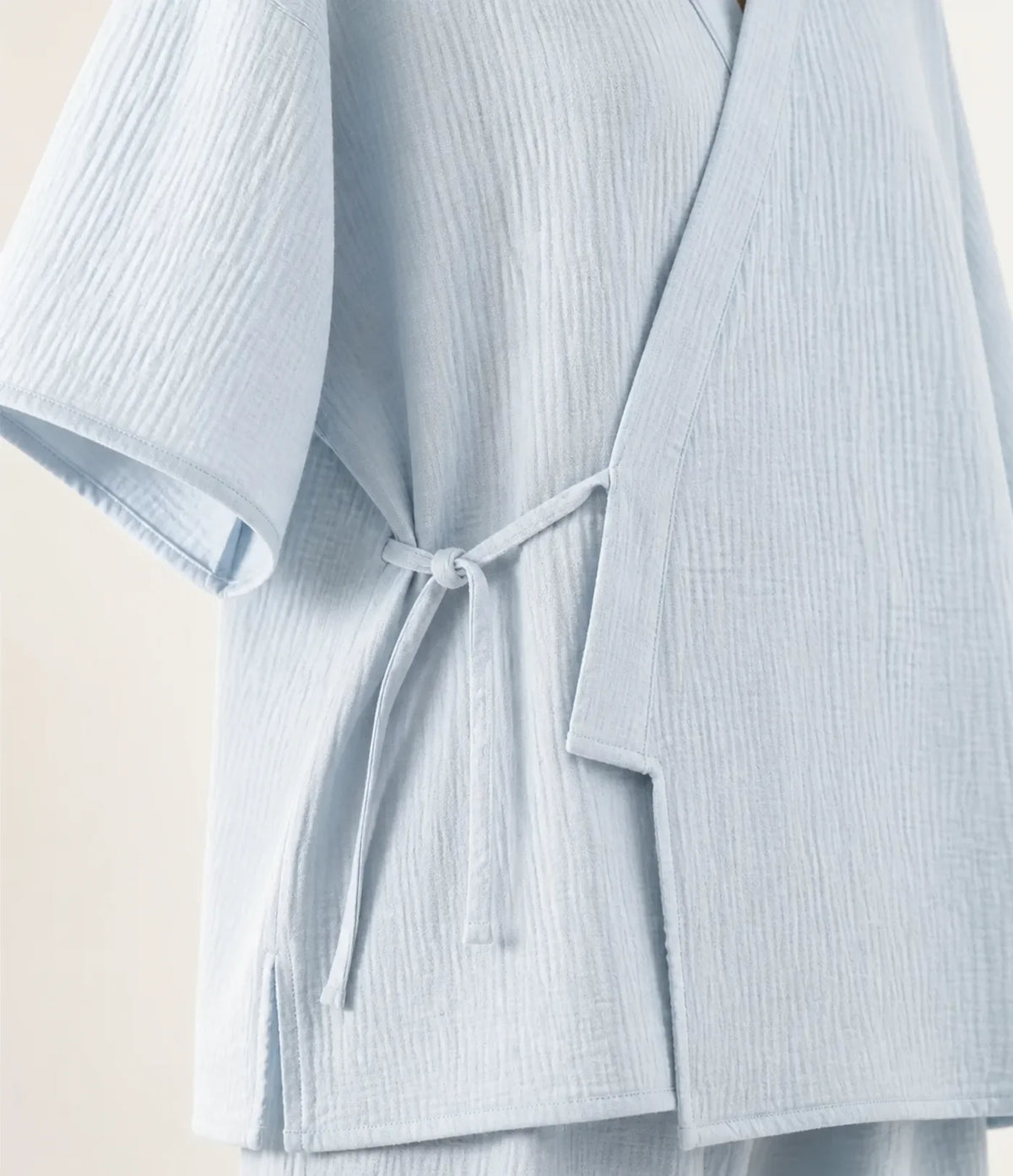
The ties and wrap-front construction also require a little more attention than an ordinary T-shirt or pair of sweatpants. Long ties can twist around other garments, collars can dry out of shape, and the jacket and trousers may fade at different rates if they are washed separately too often.
Fortunately, caring for a cotton samue is usually straightforward. A gentle washing routine, careful reshaping, and natural drying can help the set retain its comfortable fit and balanced appearance.
This guide explains how to wash a cotton samue by hand or in a washing machine, how to reduce the risk of shrinkage, and how to keep both parts of the set aging evenly.
Begin with the Garment Care Label
Before placing a samue in water, read the care label attached to the garment.
Cotton is often washable, but the word “cotton” alone does not provide complete washing instructions. A samue may contain:
-
Cotton blended with linen, polyester, or another fiber
-
Decorative stitching or printed details
-
A lining made from a different material
-
Reinforced panels
-
Synthetic cords or ties
-
Dyes that release color during washing
-
Fabric that has not been preshrunk
The manufacturer’s instructions should take priority over general advice. If a care label specifies hand washing, dry cleaning, a particular water temperature, or no tumble drying, follow those directions.
For a Seapoom cotton samue, check the label on the specific set rather than assuming that every cotton garment requires the same care.
If the label is missing or unreadable, the safer approach is usually to use cool water, minimal agitation, mild detergent, and air drying. However, this cannot guarantee that every fabric or dye will respond in the same way.
What Can Change a Samue’s Shape?
Several parts of the washing process can affect the fit of a cotton samue.
Heat
Cotton fibers may contract when exposed to hot water or a hot dryer. The amount of shrinkage varies according to the fabric, weave, finishing process, and previous treatment.
Heat can also make shrinkage uneven. Sleeves, trouser legs, collars, and layered front panels may not contract at exactly the same rate.
Strong Agitation
A vigorous wash cycle can twist the jacket, pull on the ties, and place stress on seams. It may also produce more surface wear, especially on dark or textured cotton.
Wringing
Twisting a wet samue by hand can distort the fabric and stretch the ties. Wet cotton is heavy, so forceful wringing may pull certain areas out of alignment.
Overloading the Machine
A tightly packed washing machine does not allow garments to move and rinse evenly. The samue may emerge deeply creased, tangled, or covered with detergent residue.
High-Speed or Excessive Drying
A long, hot tumble-drying cycle can shrink cotton and set wrinkles into the garment. Even when the fabric remains wearable, the collar, front overlap, or trouser legs may no longer lie as neatly as before.
Prepare the Samue Before Washing
A few minutes of preparation can prevent many common washing problems.
1. Check the Pockets
Remove tissues, receipts, coins, and other objects from every pocket. Paper left inside a pocket can break apart and spread across dark fabric, while hard objects may damage the garment or washing machine.
2. Inspect the Seams and Ties
Look for loose threads, weakened stitching, or partially detached ties. Washing can make an existing problem worse.
Do not pull a loose thread. If possible, secure or repair the affected area before washing.
3. Treat Visible Stains
It is easier to address a stain before it passes through a complete wash cycle. Blot away excess moisture or residue, then test a small amount of stain treatment on an inconspicuous area.
Avoid aggressive rubbing. It can lighten the surface of dark cotton or create a worn patch that remains visible after the stain is gone.
4. Secure the Ties Loosely
Fasten the samue ties in a loose bow or place them inside a mesh laundry bag. They should not be pulled tight, because a tight knot may be difficult to undo when wet.
The purpose is simply to stop the ties from wrapping around other garments or stretching during the cycle.
5. Turn the Garments Inside Out
Turning the jacket and trousers inside out can reduce surface friction. This is particularly useful for dark, printed, or textured cotton.
It does not completely prevent fading, but it may help limit visible abrasion on the outer surface.
6. Separate the Samue by Color
Wash dark colors with similar dark garments and light colors with other light items. New indigo, navy, black, or deeply colored cotton may release excess dye during its first several washes.
For the first wash, cleaning the samue separately is often the cautious choice.
Should the Jacket and Trousers Be Washed Together?
When the jacket and trousers have the same care instructions, washing them together generally helps them age at a similar rate.
If the jacket is washed twice as often as the trousers, it may become softer or lighter more quickly. Over time, two pieces that originally matched may develop noticeably different colors.
There are situations when separating them makes sense. One piece may have a stain that requires special treatment, or the care labels may differ because of a lining or decorative detail. In that case, use the method that is safest for each garment.
Whenever practical, keep a simple record of how the two pieces are cleaned. Consistency is more important than making every wash identical.
How to Hand-Wash a Cotton Samue
Hand washing provides more control over agitation, making it useful for delicate, loosely woven, dark-dyed, or unfamiliar cotton.
Step 1: Prepare Cool Water
Fill a clean basin with cool or cold water. Avoid hot water unless the care label specifically permits it.
Make sure the basin is large enough for the samue to move freely. Compressing both pieces into a small container can produce uneven cleaning and heavy creasing.
Step 2: Add Mild Detergent
Use a small amount of mild laundry detergent. More detergent does not necessarily produce a cleaner garment. Excess detergent can be difficult to rinse from layered collars, waistbands, and seams.
Mix the detergent into the water before adding the clothing.
Step 3: Submerge the Garment Gently
Place the samue in the water and press it down carefully. Move the fabric through the water with slow, gentle motions.
Pay attention to areas that contact the skin, including:
-
The inside of the collar
-
Underarm areas
-
Sleeve edges
-
The waistband
-
The seat and knees of the trousers
Do not scrub these areas against themselves. Gentle pressing is less likely to roughen the fabric.
Step 4: Avoid Long Soaking
Unless the care label recommends soaking, do not leave the samue submerged for an extended period. Long soaking may encourage dye release and can make certain colors appear less even.
A brief, controlled wash is usually preferable to leaving the garment unattended in water.
Step 5: Rinse Thoroughly
Drain the wash water and refill the basin with clean, cool water. Gently press the garment to release detergent.
Repeat with fresh water until the water is reasonably clear and the fabric no longer feels soapy.
Step 6: Remove Water Without Wringing
Lift the garment carefully, supporting its weight. Press out water without twisting the fabric.
You can place the samue on a clean towel, roll the towel loosely, and press to absorb additional moisture. Do not leave a dark, wet garment rolled inside a light-colored towel for a long time, because color transfer may occur.
How to Machine-Wash a Cotton Samue
Only machine-wash the garment if the care label allows it.
Choose a Gentle Cycle
Use a delicate or gentle cycle with cool water. A shorter, lower-agitation cycle reduces twisting and friction.
A mesh laundry bag can help contain the ties and prevent them from catching on zippers, buttons, or hooks from other garments.
Use a Mild Detergent
Choose a detergent suitable for the garment’s color and fabric. Measure it according to the load size rather than pouring in an estimated amount.
Avoid chlorine bleach unless the care label specifically allows it. Bleach can weaken fibers, change the color, and create uneven patches.
Fabric softener may alter the feel or absorbency of some cotton fabrics. If you are uncertain, leave it out rather than adding another treatment the garment may not need.
Keep the Load Light
Wash the samue with a small number of similar soft garments. Avoid combining it with heavy jeans, rough towels, garments with exposed hardware, or items that release large amounts of lint.
A light load allows the jacket and trousers to rinse more evenly.
Use a Moderate or Low Spin
A lower spin speed can reduce deep creases and stress on the ties. If the samue remains very wet, use a short additional spin only if the care label permits it.
Remove the garments from the machine promptly. Leaving damp cotton compressed in the drum can make wrinkles harder to release.
Special Care for Dark or Indigo-Colored Samue
Dark cotton often becomes more personal-looking as it develops subtle variations in color. However, uncontrolled fading is different from gradual, even wear.
To protect a dark samue:
-
Wash it in cool water
-
Turn both pieces inside out
-
Use detergent intended for colored garments
-
Keep it separate from light fabrics
-
Avoid unnecessary soaking
-
Dry it away from strong direct sunlight
-
Wash the jacket and trousers on a similar schedule
Some color may transfer through rubbing as well as washing, particularly when the garment is new. Be cautious around light upholstery, bags, and base layers until you understand how the fabric behaves.
If you see color in the wash water, this does not always mean the garment is damaged. Some excess dye release can occur. However, repeated heavy color loss may indicate that the washing method is too harsh or that the fabric requires more specialized care.
How to Dry a Samue Without Distorting It
Drying is one of the most important parts of shape retention.
Reshape the Garment While Damp
After washing, lay each piece on a clean surface and arrange it into its natural shape.
For the jacket:
-
Straighten the collar
-
Align the front panels
-
Smooth the shoulder seams
-
Extend the sleeves without stretching them
-
Untwist and flatten the ties
-
Make sure the hem is even
For the trousers:
-
Align the side seams
-
Smooth the waistband
-
Straighten the legs
-
Arrange ankle ties or cuffs correctly
-
Flatten the pockets
Use your hands rather than pulling forcefully. The goal is to return the damp garment to its normal proportions, not to stretch it beyond its original size.
Air-Dry in a Ventilated Area
Allow the samue to dry naturally in a shaded, well-ventilated place. Prolonged direct sunlight can fade dark or saturated colors, especially when the fabric is wet.
A broad, supportive hanger can work for a lightweight jacket. Avoid a narrow wire hanger that may leave points at the shoulders.
If the wet jacket feels heavy or the fabric stretches easily, dry it flat on a clean drying rack or towel. Turn it when necessary so both sides dry completely.
Trousers can be hung from the waistband with clips, provided the clips do not leave strong marks. Distribute the weight evenly and keep the legs aligned.
Avoid the Dryer Unless Permitted
Do not automatically place a cotton samue in a tumble dryer. High heat is a common cause of cotton shrinkage.
If the care label allows tumble drying, choose the lowest appropriate temperature and remove the garment while it is still slightly damp. Reshape it immediately and complete the drying process in the air.
How to Iron or Steam a Cotton Samue
A freshly washed samue does not need to look sharply pressed. Its appearance is usually more relaxed than that of a formal shirt. However, flattening the collar, front overlap, and ties can help restore its structure.
Check the care label before applying heat.
For ordinary cotton, ironing while the garment is slightly damp may make wrinkles easier to remove. Use moderate pressure and avoid forcing a crease into areas that are meant to remain soft.
Take extra care around:
-
Printed designs
-
Embroidery
-
Synthetic trims
-
Reinforced stitching
-
Elastic waistbands
-
Fabric blends
Iron the reverse side of decorated fabric when possible, and test a hidden area before treating a visible section.
A garment steamer can relax light wrinkles, but it still introduces heat and moisture. Keep the steamer moving rather than concentrating it on one spot.
How Often Should a Samue Be Washed?
There is no universal schedule. Washing frequency depends on climate, activity, fabric weight, and whether the samue is worn over a base layer.
A samue worn for active work in hot weather will usually need washing sooner than one worn for quiet indoor use in a cool room.
You may be able to reduce unnecessary washing by:
-
Wearing a clean base layer
-
Airing the garments after use
-
Brushing away dry surface debris
-
Treating small stains promptly
-
Allowing moisture to evaporate before storage
-
Rotating between garments
The goal is not to avoid cleaning. It is to wash when necessary without putting the fabric through more cycles than its actual use requires.
Never store a samue while it is damp or noticeably soiled. Moisture and residue can create odors and may attract insects during long-term storage.
Common Samue Washing Mistakes
Using Hot Water Without Checking the Label
Hot water may cause shrinkage, dye loss, or uneven changes in the fabric.
Pouring Detergent Directly onto the Garment
Concentrated detergent can be difficult to distribute and may leave a visible area on dark material. Dilute it in the water or use the machine’s detergent compartment.
Pulling the Ties Tight Before Washing
Tight knots become harder to release when wet and may place unnecessary strain on the attachment points.
Washing the Set with Rough Hardware
Exposed zippers, hooks, and metal fasteners can catch the samue fabric or damage its ties.
Twisting the Garment to Remove Water
Wringing may distort the front panels, collar, or trouser legs.
Leaving the Garment in Direct Sun for Too Long
Strong sunlight can create noticeable fading, especially if only one side of the garment receives direct exposure.
Drying One Piece Differently from the Other
Regularly tumble-drying the trousers while air-drying the jacket may eventually produce differences in size, texture, and color.
A Simple Cotton Samue Care Routine
For quick reference, a cautious routine looks like this:
-
Read the care label.
-
Empty the pockets and inspect the seams.
-
Treat stains gently and test products in a hidden area.
-
Loosely secure the ties.
-
Turn the jacket and trousers inside out.
-
Wash both pieces together when their care instructions match.
-
Use cool water, mild detergent, and gentle agitation.
-
Rinse thoroughly.
-
Press out water without wringing.
-
Reshape the collar, panels, sleeves, waistband, and trouser legs.
-
Air-dry in the shade with good ventilation.
-
Store only after both pieces are completely dry.
A samue does not need complicated maintenance, but small choices matter. Cool water, limited agitation, careful reshaping, and low-heat drying protect more than the fabric itself. They also help preserve the proportions and easy movement that make the garment comfortable to wear.
Frequently Asked Questions
1. Can I wash a cotton samue in a washing machine?
You can machine-wash it only when the care label permits it. Use cool water, a gentle cycle, mild detergent, and a light load. Loosely secure the ties or place the garments in a mesh laundry bag to reduce tangling. If the label calls for hand washing, follow that instruction even if the main fabric is cotton.
2. How can I prevent a cotton samue from shrinking?
Use cool water, avoid strong agitation, and air-dry the garment away from direct heat. Reshape the jacket and trousers while they are damp. Do not use a hot tumble dryer unless the care label specifically allows it. These steps reduce the risk of shrinkage, but they cannot guarantee that untreated cotton will not change at all.
3. Should I wash the samue jacket and trousers together?
Usually, yes. If both pieces have the same care instructions and similar color, washing them together helps keep their softness and fading consistent. Wash them separately if one piece needs special stain treatment or has different care requirements.

Leave a comment
This site is protected by hCaptcha and the hCaptcha Privacy Policy and Terms of Service apply.