

A haori is one of the most adaptable garments associated with Japanese dress. Its straight shape and open front are easy to recognize, but it is often confused with kimono, hanten, noragi, and the many modern jackets described as “kimono-style.”
The simplest explanation is that a haori is an outer jacket traditionally worn over a kimono. It does not replace the kimono underneath, and it is not normally wrapped around the body and secured with an obi. Instead, it hangs from the shoulders as a separate layer.
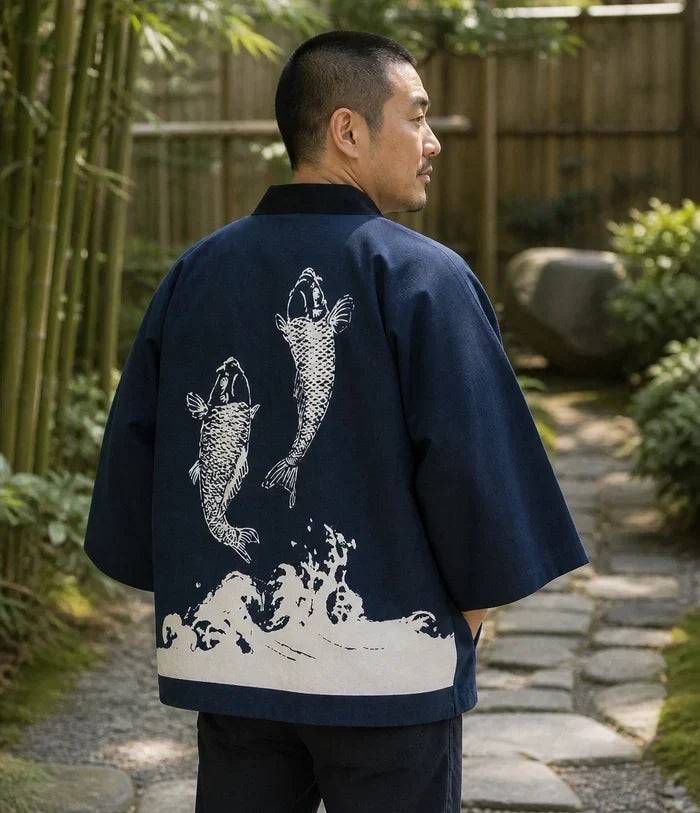
Today, traditional haori continue to be worn with kimono, while contemporary versions can be paired with shirts, dresses, jeans, and other everyday clothing. Understanding the garment’s original structure makes it easier to recognize thoughtful modern interpretations and choose one that fits your wardrobe.
What Does “Haori” Mean?
Haori is written 羽織 in Japanese. The name is connected with the act of putting a garment on over other clothing.
Rather than being a complete outfit, a haori is an outer layer. Traditional examples usually reach somewhere between the hip and thigh, although length varies according to period, design, and intended use.
A haori generally has:
- A straight, open front
- A collar band that continues down the front edges
- Wide or rectangular sleeves
- A loose body with relatively little shaping
- A hip-length or thigh-length hem
- Optional front cords called haori-himo
The cords connect the two front sides without making them overlap like a kimono. Many contemporary haori-style jackets omit the cords and are designed to remain completely open.
Is a Haori a Kimono?
A haori is part of traditional Japanese clothing, but it is not the same garment as a kimono.
A kimono is a full-length wrap garment. Its front panels overlap, and it is secured around the body with an obi. Depending on the type and occasion, a complete kimono outfit can include several underlayers, ties, accessories, socks, and sandals.
A haori is a shorter jacket worn on top. It normally hangs open and is not secured with an obi.
A useful way to remember the distinction is:
- The kimono forms the main outfit.
- The haori forms the outer layer.
Online stores sometimes use “kimono jacket” as an accessible description for haori and haori-inspired clothing. That phrase can help new shoppers understand the silhouette, but it does not make every loose, wide-sleeved jacket a traditional haori.
How Is a Haori Different from a Yukata?
A yukata is a casual, unlined type of kimono associated with warm weather, festivals, bathing, and stays at traditional inns. It is full length, wraps across the body, and is secured with an obi.
A haori is shorter and serves as a jacket.
Traditional haori are more commonly coordinated with kimono than with yukata. Yukata outfits are intentionally lighter and simpler, so adding a formal silk haori may make the combination feel mismatched.
For contemporary styling, the rules are less strict. A lightweight haori-inspired jacket can be worn over many summer outfits, but this should be understood as modern fashion rather than formal yukata dressing.
Haori vs. Hanten
Haori and hanten can look similar in photographs because both may have a short body, straight seams, and wide sleeves. Their most common uses are different.
A haori is an outer layer connected with kimono dress. It is usually unpadded and valued for its fabric, pattern, drape, and relationship with the outfit underneath.
A winter hanten is a practical short coat constructed with insulation between its outer fabric and lining. Its main purpose is warmth.
When comparing the two, check these details:
- Padding: A winter hanten is normally padded; a haori usually is not.
- Closure: Hanten often have simple front ties, while haori may use smaller decorative cords.
- Shape: Hanten tend to look fuller because of their insulation.
- Purpose: Haori emphasize layering and appearance; padded hanten emphasize warmth.
- Fabric: Haori may use fine woven or dyed fabric, while hanten often use durable cotton or blended materials.
Not every hanten is padded, so the product specifications remain more reliable than the title alone.
Haori vs. Noragi
Noragi is a broad term for traditional Japanese field and work clothing. It does not describe one standardized jacket in the same way that a modern blazer or denim jacket does.
Traditional noragi were practical garments worn during agricultural or manual work. Surviving examples may show repairs, reinforced areas, faded indigo, or patches added over years of use.
Haori developed in a different clothing context. It was worn as an outer jacket over kimono rather than primarily as field clothing.
Modern fashion often blends these influences. A jacket sold as noragi-inspired may use a haori-like shape together with:
- Large utility pockets
- Strong cotton or denim
- Reinforced seams
- Front ties
- A roomier workwear fit
If a contemporary jacket combines elements from both categories, the fabric, pockets, closure, and construction will tell you more than the product name.
Traditional and Contemporary Haori
Traditional haori are made to coordinate with kimono. Their proportions, sleeve openings, and overall construction accommodate the garments worn underneath.
Many traditional examples use silk, although haori can also be found in wool, rayon, cotton, and synthetic fabrics. Some have restrained exteriors with more decorative linings. Others feature woven, dyed, or printed patterns across the visible surface.
Contemporary haori-style jackets are designed for a different wardrobe. They may include:
- Shorter or longer hems
- Narrower sleeves
- Cotton-linen fabric
- Denim or canvas
- Patchwork panels
- Pockets
- Reversible construction
- Modern size ranges
- Machine-washable materials
These changes are not automatically a problem. They can make the basic haori silhouette more practical for daily wear. The important point is to distinguish a traditional haori from a modern garment inspired by one.
How Should a Haori Fit?
A haori should have room to hang cleanly from the shoulders without pulling tightly across the back or upper arms.
Unlike a fitted Western jacket, it does not need to follow the waist. The body is generally straight, and the open front creates vertical lines rather than a shaped silhouette.
The right fit depends on how you plan to wear it.
For a closer, cleaner fit
Choose a size with moderate room through the chest and shoulders. This works well over a T-shirt, light shirt, or thin dress.
The front edges should hang vertically without being pulled toward the sides. You should be able to raise and move your arms without feeling tension across the back.
For a relaxed fit
Choose more width through the body and sleeves. A relaxed haori can be layered over a sweatshirt, knit top, or loose shirt.
Extra width changes the visual balance, so also check the garment length. A very wide jacket with a short hem can appear boxy, while a longer hem usually creates a more vertical shape.
For traditional kimono wear
The sleeve size and openings must work with the kimono underneath. A haori intended for Western clothing may not accommodate traditional kimono sleeves correctly, even when the body measurement fits.
Measurements to Check Before Buying
Do not rely only on labels such as small, medium, large, or one size. Compare the actual garment measurements with a jacket you already own.
Chest width
Many stores measure the garment flat from one side of the chest to the other. Doubling this number gives an approximate circumference, but always check how the store defines its measurements.
Because the haori remains open, the front edges do not always need to meet. Even so, the back and shoulders must have enough room for comfortable movement.
Shoulder width
Some modern haori have a defined shoulder seam. Others use dropped shoulders or traditional-style straight construction, which makes the shoulder appear wider.
A dropped shoulder is not necessarily a sign that the jacket is too large. It may be part of the intended silhouette.
Sleeve reach
Traditional Japanese garments may use a center-back-to-cuff measurement instead of measuring only from the shoulder seam. Read the size diagram carefully before comparing it with a Western jacket.
Decide whether you want the cuff to finish near the wrist, above it, or lower on the hand. Sleeve length has a strong effect on how traditional or contemporary the jacket appears.
Garment length
A short haori may finish around the upper hip, while longer versions can extend to the thigh or below.
Shorter lengths work easily with wide-leg trousers and skirts. Longer versions provide more coverage and create a coat-like line.
Sleeve opening and armhole
Wide sleeves do not always mean the armhole is equally generous. If you plan to wear thick clothing underneath, check both areas where measurements are available.
Choosing the Right Fabric
Fabric changes how a haori looks, moves, and feels more than almost any other detail.
Silk
Silk can produce a soft drape, subtle sheen, and detailed color. Traditional or vintage silk haori may require careful storage and professional cleaning.
Choose silk when the textile itself is a priority and you are prepared for more delicate care.
Cotton
Cotton is comfortable, familiar, and suitable for casual wear. Its weight can range from light shirting fabric to heavier canvas.
A light cotton haori works well in mild or warm weather. A denser cotton version feels closer to a workwear jacket.
Linen and cotton-linen blends
Linen adds texture and breathability. It also wrinkles more visibly, which can suit a relaxed garment but may not appeal to someone seeking a crisp surface.
Cotton-linen blends often balance airflow, softness, and easier handling.
Denim
Denim gives a haori-inspired jacket more structure. It works particularly well with noragi and workwear influences.
Raw or dark denim may release dye, especially when new. Wear and wash it carefully around light-colored clothing.
Polyester and other synthetic fibers
Synthetic fabrics can offer easy care, wrinkle resistance, consistent color, and a lower price. Their breathability and texture vary widely, so the fiber name alone does not indicate quality.
Check the fabric weight, lining, finish, and care instructions rather than assuming all polyester jackets will feel the same.
How to Wear a Haori with Modern Clothing
A haori does not require an elaborate outfit. Its shape is already distinctive, so simple combinations often work best.
With a T-shirt and jeans
This is one of the easiest starting points. A plain T-shirt keeps the neckline uncomplicated, while jeans give the outfit a familiar base.
A black, indigo, gray, sand, or olive haori can be used much like an unstructured casual jacket.
With a button-down shirt
A shirt creates a slightly neater outfit without making the haori look overly formal. Keep the shirt collar open or simple so it does not compete with the haori’s front band.
Straight trousers, cropped pants, or dark denim can complete the look.
With a dress
A lightweight haori can add coverage and shape to a simple dress. Compare the two hem lengths: a cropped haori emphasizes the waist area, while a longer jacket creates a continuous vertical line.
If the dress is heavily patterned, a solid haori is usually easier to coordinate.
With wide-leg trousers
The straight body of a haori works naturally with wide trousers. To keep the outfit balanced, use a relatively simple top underneath and make sure the jacket length does not end at an awkward point on the widest part of the body.
In cool weather
An unpadded haori is not a replacement for a winter coat. It can still be layered over a thin knit or under a larger coat, provided the sleeves fit comfortably.
Avoid forcing wide sleeves into narrow coat sleeves, as this can create bunching and restrict movement.
Color and Pattern Coordination
If the haori has a strong pattern, let it become the main visual element. Choose quieter colors for the rest of the outfit.
If the haori is solid, texture can provide interest. Indigo denim, slub cotton, linen, or visible patchwork may look detailed even without a printed design.
A practical approach is to repeat one color from the jacket elsewhere in the outfit. This could be the shirt, trousers, shoes, or a small accessory. The colors do not need to match exactly; they only need to feel related.
Avoid assuming that every Japanese motif has one universal meaning. Meanings can change according to period, region, season, and the way motifs are combined.
Can Anyone Wear a Haori?
A person does not need to be Japanese to wear a haori or a contemporary haori-inspired jacket.
The most respectful approach is to learn the garment’s name, understand whether it is traditional or modern, and describe it accurately. Wearing it as clothing is generally more natural than treating it as a costume or attaching invented cultural meanings to its pattern.
Context also matters. A casual haori-style jacket worn with jeans is different from a formal traditional outfit prepared for a ceremony. When attending an event with a dress code, ask the organizer or someone familiar with the occasion if you are uncertain.
How to Care for a Haori
Always follow the garment’s care label. The word “haori” describes a type of clothing, not one universal cleaning method.
General precautions include:
- Clean silk or vintage garments professionally unless their care instructions state otherwise.
- Wash dark or indigo-dyed cotton separately during its first washes.
- Use cool water and a gentle cycle only when machine washing is permitted.
- Avoid tumble drying unless the label specifically allows it.
- Reshape the jacket before air drying.
- Do not leave the garment in direct sunlight for extended periods.
- Make sure it is completely dry before storage.
- Avoid thin wire hangers that can distort the shoulders.
If the garment is reversible, check the care requirements for both fabrics and any internal padding before washing it.
What to Check on a Product Page
Before ordering a haori or haori-style jacket online, confirm:
- Whether it is traditional, vintage, or Japanese-inspired
- The exact fabric composition
- Whether it is lined
- Whether front cords are included
- Whether it has pockets
- The garment’s chest, shoulder, sleeve, and length measurements
- Whether the fit is intended to be regular or oversized
- The recommended cleaning method
- The country of manufacture
- Whether the pattern placement varies between pieces
If you are comparing a Seapoom haori-style jacket with clothing already in your wardrobe, use the listed garment measurements rather than choosing by the size name alone.
Final Thoughts
A haori is traditionally an outer jacket worn over kimono, but its open front and straight construction also make it suitable for modern layering.
It differs from a kimono because it is a jacket rather than the main full-length garment. It differs from a winter hanten because it is generally unpadded and not primarily designed for insulation. It also has a different history from noragi, even though modern jackets may combine elements of both.
When choosing one, focus on fabric, measurements, sleeve construction, lining, and intended use. Those details will help you find a haori that works as a considered part of your wardrobe rather than a garment purchased only for its name.
Frequently Asked Questions
Is a haori the same as a kimono?
No. A kimono is a full-length wrap garment secured with an obi, while a haori is a shorter outer jacket traditionally worn over a kimono. A haori usually hangs open or uses small front cords rather than wrapping across the body.
Can a haori be worn with jeans and other Western clothing?
Yes. A haori can be worn over T-shirts, shirts, dresses, jeans, and wide-leg trousers. Traditional silk haori may require more careful coordination, while contemporary cotton, linen, or denim versions are especially suitable for casual outfits.
How should a haori jacket fit?
A haori should hang comfortably from the shoulders with enough room across the back and upper arms. The front does not need to close completely. Check the garment’s chest width, shoulder width, sleeve reach, and length instead of relying only on the labeled size.

Leave a comment
This site is protected by hCaptcha and the hCaptcha Privacy Policy and Terms of Service apply.