

A hanten is a short Japanese coat with a relaxed shape, wide sleeves, and simple front ties. Although the name can refer to more than one kind of garment, international shoppers most often encounter the padded hanten worn for warmth during cold weather.
Its uncomplicated construction makes it easy to put on over everyday clothing. Unlike a full-length kimono, a hanten does not require an obi or specialized dressing knowledge. Unlike a fitted Western jacket, it leaves room around the shoulders, chest, and arms for comfortable movement.
That combination of warmth and simplicity explains why the padded hanten remains useful in modern life. However, not every coat called a hanten is insulated, and several similar Japanese jackets are frequently mislabeled online.
Understanding the differences will help you choose a garment that suits your climate, routine, and preferred style.
What Is a Hanten?
A hanten is a short Japanese coat that usually reaches the hip or upper thigh. It has a straight body, relatively wide sleeves, and a front that may be secured with fabric ties.
Many modern winter hanten are constructed with three layers:
- An outer fabric
- An insulating middle layer
- An inner lining
The insulation traps warm air around the body, while the loose shape allows the coat to be worn over shirts, sweaters, loungewear, or other light layers.
The front normally does not close with a zipper or row of buttons. It may remain partly open even when the ties are fastened. This makes the coat easy to put on and remove, although it also means that a hanten may not block strong wind as effectively as a technical winter jacket.
Are All Hanten Padded?
Not every hanten is padded.
The word has been used for different short coats, including practical work garments, coats that identified members of a business or organization, and insulated clothing for cold weather.
Today, the products most often described in English as hanten jackets are padded winter coats. This has led many shoppers to assume that padding defines the entire category.
A product page should clearly state whether the garment is:
- Padded or unpadded
- Quilted or non-quilted
- Lined or unlined
- Intended for warmth, work, festivals, or casual fashion
If a listing does not mention insulation, do not assume that the jacket will be warm simply because it is called a hanten.
A Brief History of the Hanten
Hanten became associated with practical clothing for ordinary people during the Edo period. Different forms were worn by craftspeople, shop workers, firefighters, and others whose clothing needed to support daily activity.
Some work-related hanten displayed large characters, crests, or symbols. These could identify a shop, trade, fire brigade, or local group. The garment served as clothing, but it could also communicate the wearer’s affiliation.
The padded hanten developed as a useful cold-weather layer. Traditional Japanese homes could be difficult to heat evenly, so personal layers helped people remain comfortable without heating every room to the same temperature.
Modern padded hanten continue this practical role. They are commonly worn at home, but some designs also work for errands, travel, workshops, studios, or casual outdoor use in calm weather.
How a Padded Hanten Is Constructed
The shape may look simple, but several construction details affect comfort and durability.
Straight body
A hanten generally has a straight, roomy torso rather than a shaped waist. This creates space for clothing underneath and allows the wearer to sit, reach, and move without the coat feeling restrictive.
Wide sleeves
The sleeves are often wider than those on a Western cardigan or fitted jacket. The extra space supports movement and makes layering easier.
Sleeve length varies. Some hanten have cuffs that finish above the wrist, helping keep the sleeves away from water, food, tools, or household tasks.
Front ties
Simple fabric ties hold the front sides closer together. They are not designed to pull the garment tightly around the body.
Ties should feel secure without causing the front panels to twist. If they are pulled too tightly, the coat may bunch at the chest or neckline.
Outer fabric
Cotton is common because it is comfortable, durable, and suitable for printed or woven patterns. Modern hanten may also use polyester, cotton blends, denim, or other fabrics.
The outer fabric affects texture and appearance, but it does not determine warmth by itself.
Insulating layer
Traditional and modern fillings vary. Some hanten use cotton-based padding, while others use polyester or blended insulation.
Cotton can feel substantial and comfortable, but it may dry slowly. Synthetic insulation is often lighter, easier to maintain, and more resistant to losing warmth when exposed to a small amount of moisture.
Inner lining
The lining sits against the wearer’s clothing and helps contain the insulation. A smooth lining makes the jacket easier to put on over knitwear, while a soft cotton lining may feel more natural against light indoor clothing.
Hanten vs. Haori
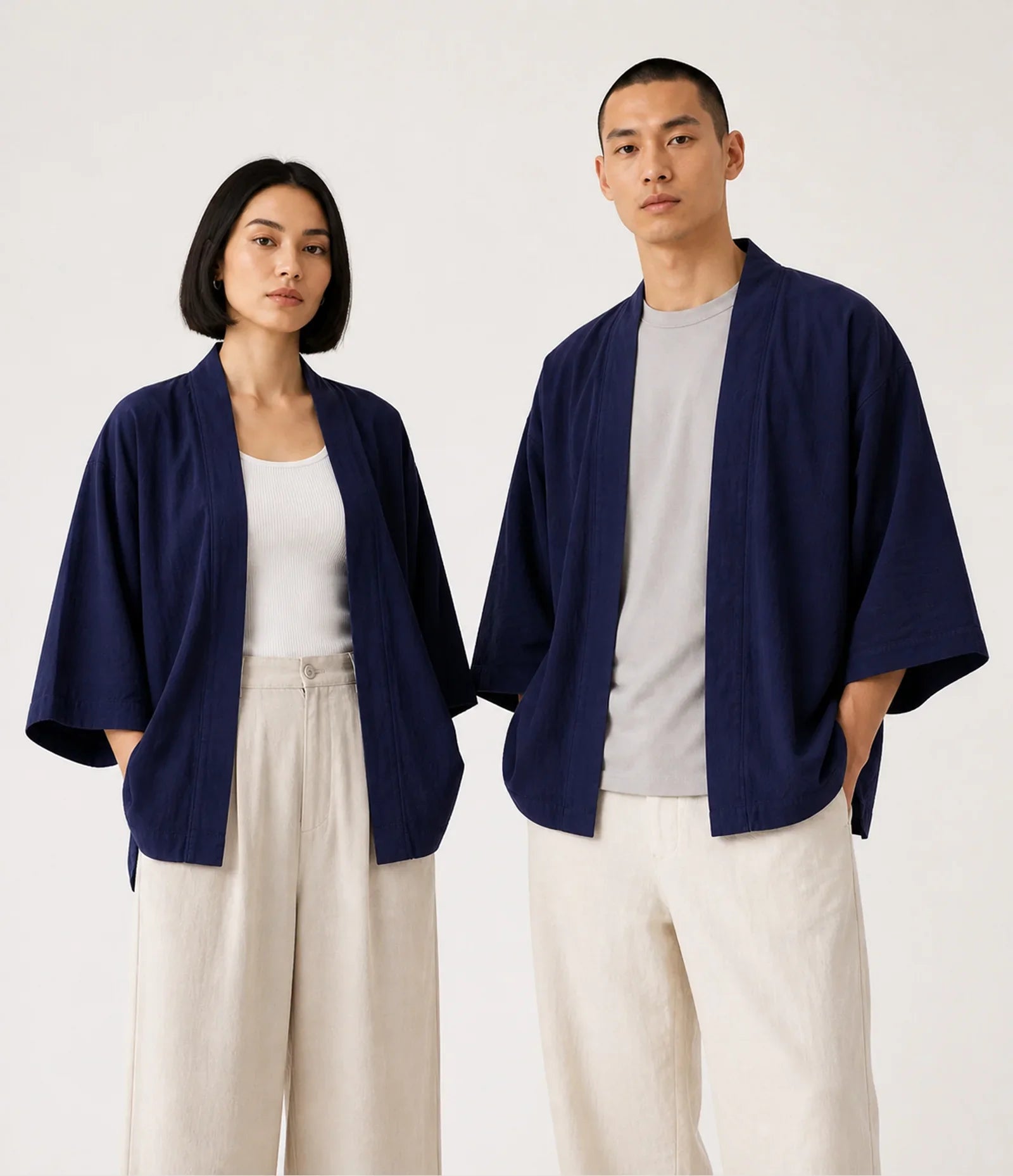
Hanten and haori share a short, straight silhouette, but their usual purposes are different.
A haori is traditionally an outer jacket worn over kimono. It is generally unpadded and valued as part of a coordinated outfit. Some haori use small decorative front cords, while others hang open.
A winter hanten is primarily a practical layer for warmth. It usually has visible insulation, a fuller body, and simple ties.
The main differences are:
- A haori is normally unpadded; a winter hanten is padded.
- A haori is connected with kimono coordination; a hanten is associated more closely with practical use.
- A haori tends to drape more lightly; a padded hanten has a fuller shape.
- A hanten is usually selected for comfort and warmth rather than formality.
Modern Japanese-inspired jackets can combine characteristics of both, so examine the construction instead of relying only on the product name.
Hanten vs. Happi Coat
Hanten and happi are sometimes treated as interchangeable terms, especially in online listings. However, the coat most shoppers picture when they hear “happi” is usually an unpadded festival or group garment.
Happi coats often feature:
- Large symbols or lettering
- Contrasting trim
- A lightweight, unpadded body
- A matching belt or sash
- Use at festivals, performances, shops, or team events
A padded winter hanten is designed mainly to retain heat. It generally has a softer and fuller structure without the bold uniform-like appearance associated with many happi coats.
If the garment is lightweight and printed with large festival-style characters, it may be closer to a happi coat. If it contains visible insulation and is intended for cold weather, it is likely a padded hanten.
Hanten vs. Noragi
Noragi is a broad name for traditional Japanese field and work clothing. It is associated with practical garments worn for agricultural and manual work rather than one strictly standardized jacket.
Modern noragi-style jackets often use durable cotton, denim, patchwork, utility pockets, and wrap or tie closures. They are usually unpadded and intended as casual workwear-inspired outer layers.
A padded hanten is warmer and fuller. Its insulation makes it better suited to sitting, light activity, or household work in cool conditions.
Choose a noragi-style jacket when you want structure, pockets, and workwear character. Choose a padded hanten when warmth and soft comfort are the main priorities.
Hanten vs. Kimono
A hanten is not a type of full-length kimono.
A kimono wraps across the body, extends toward the ankles, and is secured with an obi. Traditional kimono dressing may also require undergarments, ties, socks, sandals, and other accessories.
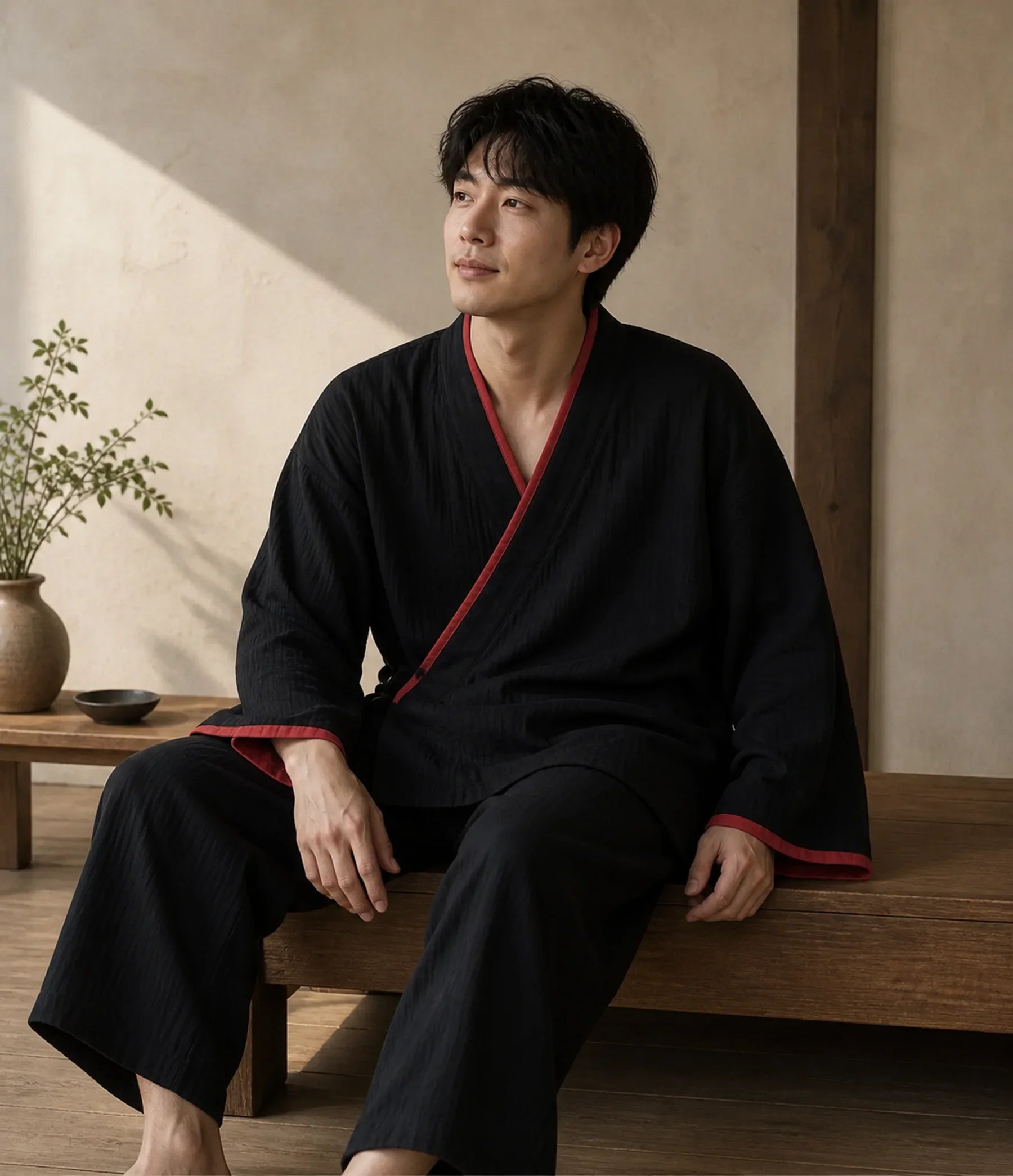
A hanten is a short coat worn over other clothing. It can be put on in seconds and does not require an obi.
The confusion often comes from the shared use of straight seams and wide sleeves. Those visual similarities do not make the garments interchangeable.
How Warm Is a Hanten?
There is no universal temperature rating for hanten. Warmth depends on construction, materials, fit, activity, wind, and the clothing worn underneath.
Important factors include:
Amount of insulation
A lightly padded hanten may be suitable for a cool room, while a thicker version retains more heat. Product photographs do not always show the difference clearly, so check the garment weight and filling information.
Coverage
A longer hanten covers more of the hips and upper legs. A shorter style provides greater freedom of movement but retains less heat around the lower body.
Fit
A small amount of space inside the coat helps trap warm air. If the jacket is too tight, the insulation may compress and become less effective.
A very oversized hanten can allow warm air to escape through the neckline, sleeves, and open front. The best fit provides layering room without feeling excessively loose.
Wind resistance
Many padded hanten are intended primarily for indoor use. Their open necklines, front ties, and wide sleeves allow air to enter more easily than a zipped winter coat.
For outdoor wear in wind, rain, or snow, use an appropriate weather-resistant layer rather than depending on the hanten alone.
Activity level
A hanten may feel warm while you are cooking, moving around the house, or doing light work. The same garment may feel less warm when you are sitting still for a long time.
How Should a Hanten Fit?
A hanten should feel roomy without constantly sliding off the shoulders.
You should be able to:
- Cross your arms comfortably
- Reach forward without tightness across the back
- Wear a shirt or light sweater underneath
- Sit down without the coat pulling upward
- Fasten the front ties without distorting the neckline
The shoulder may extend beyond your natural shoulder point. This is often part of the relaxed construction rather than evidence that the size is wrong.
Measurements to Check Before Buying
Chest width
Check the flat garment measurement and compare it with a comfortable jacket you already own. If the store gives only a circumference, allow enough room for the layers you plan to wear underneath.
Remember that the front ties are not designed to pull a small jacket closed.
Shoulder and back width
The upper back should have enough room for reaching and sitting. This measurement is particularly important if you have broad shoulders or plan to wear a sweater underneath.
Sleeve length
Some hanten sleeves finish above the wrist. This can be practical indoors and should not automatically be interpreted as poor sizing.
Check where the cuff is intended to fall rather than assuming it should match a Western coat sleeve.
Garment length
A longer hanten offers more coverage, while a shorter one may be easier for active work. Measure from the base of the neck to your preferred hem position.
Sleeve opening
Wide sleeves improve airflow and movement but may also allow heat to escape. If warmth is the priority, check whether the cuffs are very open or moderately fitted.
What to Wear Under a Hanten
The best layers depend on the temperature and activity.
For a mildly cool room, try:
- A long-sleeve cotton shirt
- Lightweight loungewear
- A thin knit top
- A simple samue set
For colder indoor conditions, add:
- A thermal base layer
- A medium-weight sweater
- Warm trousers
- Socks or indoor slippers
Avoid wearing so many thick layers that the hanten becomes tight across the shoulders. Insulation works best when it is not heavily compressed.
Can a Hanten Be Worn Outside?
A hanten can be worn outside for short walks, errands, or calm-weather activities if its fabric and insulation are suitable.
Before using one outdoors, consider:
- Wind strength
- Chance of rain or snow
- Outdoor temperature
- Length of time outside
- Visibility in low light
- Whether the outer fabric resists light moisture
A cotton hanten can absorb water and may take time to dry. It should not replace waterproof or technical outerwear when conditions are wet or severe.
For casual styling, pair a solid or subtly patterned hanten with jeans, straight trousers, work pants, or simple sneakers. Keeping the rest of the outfit restrained allows the jacket’s shape and texture to remain the focus.
How to Choose a Hanten Online
Product titles alone may not provide enough information. Check the following details:
- Whether the garment is padded
- Outer fabric composition
- Insulation material
- Lining material
- Garment weight
- Chest, shoulder, sleeve, and length measurements
- Pocket placement
- Front tie construction
- Recommended season
- Washing instructions
- Country of manufacture
If a listing uses the word “traditional,” read the description carefully to determine whether it refers to the silhouette, fabric pattern, construction, or actual origin.
When comparing a Seapoom hanten with a jacket you already own, place your existing jacket flat and compare the measurements directly. This is more reliable than choosing only by the usual size label.
How to Care for a Padded Hanten
Always follow the attached care label because the outer fabric, insulation, and lining may require different treatment.
General care practices include:
- Spot-clean small marks when possible.
- Avoid washing more often than necessary.
- Fasten or loosely secure the front ties before washing.
- Use a laundry bag if machine washing is permitted.
- Select cool water and a gentle cycle.
- Avoid bleach unless the label specifically allows it.
- Do not wring or aggressively twist the coat.
- Reshape the padding before drying.
- Allow the garment to dry completely before storage.
- Avoid tumble drying unless it is explicitly permitted.
Padding can shift or form uneven areas after improper washing. Gently distributing the filling while the garment dries may help restore an even shape.
How to Store a Hanten
Make sure the coat is clean and completely dry before storing it for an extended period.
Store it in a cool, dry place with reasonable airflow. Avoid sealing it in plastic while any moisture remains inside, as trapped humidity can create odor or mildew.
Do not place heavy objects on top of a padded hanten for several months. Long-term compression can flatten the insulation and create deep creases.
If you fold the coat, use broad, gentle folds. Air it periodically during long storage, especially in humid climates.
Final Thoughts
A hanten is a practical Japanese short coat, but the name does not refer exclusively to one padded winter design. Different forms have been used for work, group identity, festivals, and protection from cold.
For most modern shoppers, the key distinction is between an unpadded coat and an insulated winter hanten. A padded hanten offers comfortable warmth, easy movement, and a relaxed fit without the complexity of a full traditional outfit.
Before buying, examine the padding, fabric, measurements, lining, care instructions, and intended use. These details will help you determine whether the garment is suitable for indoor comfort, casual outdoor wear, or simply the visual style you want.
Frequently Asked Questions
Are all Japanese hanten jackets padded?
No. Hanten can refer to different short Japanese coats, including unpadded work or group garments. The styles most commonly sold internationally as winter hanten contain insulation, but shoppers should always check the product description for padding and lining details.
Is a hanten the same as a haori?
No. A haori is traditionally an unpadded outer jacket worn over kimono, while a winter hanten is a practical insulated coat designed mainly for warmth. Their silhouettes can be similar, but their construction and usual purposes are different.
Can a padded hanten be worn outdoors in winter?
A padded hanten can work for short periods outside in cool, dry, and calm weather. However, many hanten are designed primarily for indoor use and may not provide enough wind or water protection for severe winter conditions.

Leave a comment
This site is protected by hCaptcha and the hCaptcha Privacy Policy and Terms of Service apply.