

Japanese-style jackets are known for straight lines, relaxed proportions, and sleeves that allow comfortable movement. However, two jackets with a similar silhouette can perform very differently.
A lightweight cotton-linen haori-inspired jacket may feel comfortable on a warm evening but provide little protection from winter wind. A padded hanten may keep you warm at home while feeling too bulky in a heated office. A denim noragi-style jacket can work well for everyday wear but may be heavier than expected for travel.
Choosing the right jacket begins with practical questions:
- What weather will you wear it in?
- Will you use it indoors or outdoors?
- What clothing will you wear underneath?
- Do you need pockets?
- How much maintenance are you comfortable with?
- Do you prefer a structured or flowing silhouette?
Once these questions are answered, the design becomes easier to evaluate.
Start with How You Will Use the Jacket
The most useful jacket is not necessarily the most decorative one. It is the garment that fits naturally into your routine.
Before comparing colors or patterns, decide where you expect to wear it most often.
For Everyday Casual Wear
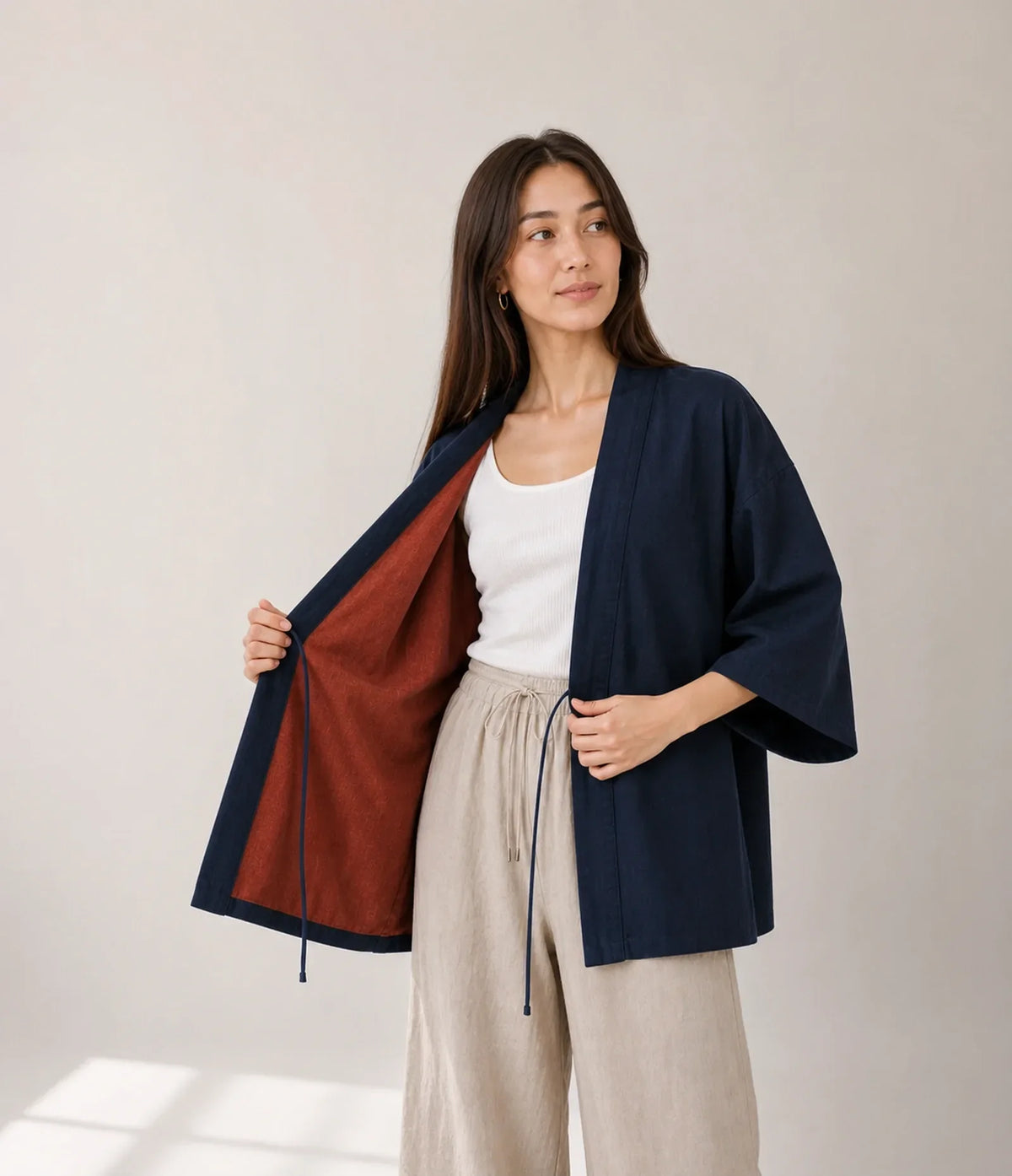
A lightweight or medium-weight haori-inspired jacket is a flexible choice for ordinary outfits.
An open front makes it easy to wear over:
- T-shirts
- Button-down shirts
- Thin knitwear
- Dresses
- Jeans
- Wide-leg trousers
For regular use, look for fabric that holds its shape without feeling stiff. Cotton, cotton-linen blends, and medium-weight woven fabrics are practical choices.
A neutral color such as black, indigo, gray, sand, or olive will usually coordinate with more of your existing wardrobe than a highly specific pattern.
For Home and Relaxation
Comfort becomes the main priority when a jacket will be worn at home.
Look for:
- A soft inner surface
- Room around the shoulders
- Sleeves that do not interfere with household tasks
- Simple ties or an open front
- Fabric that does not feel rough against light clothing
- Care instructions suitable for regular use
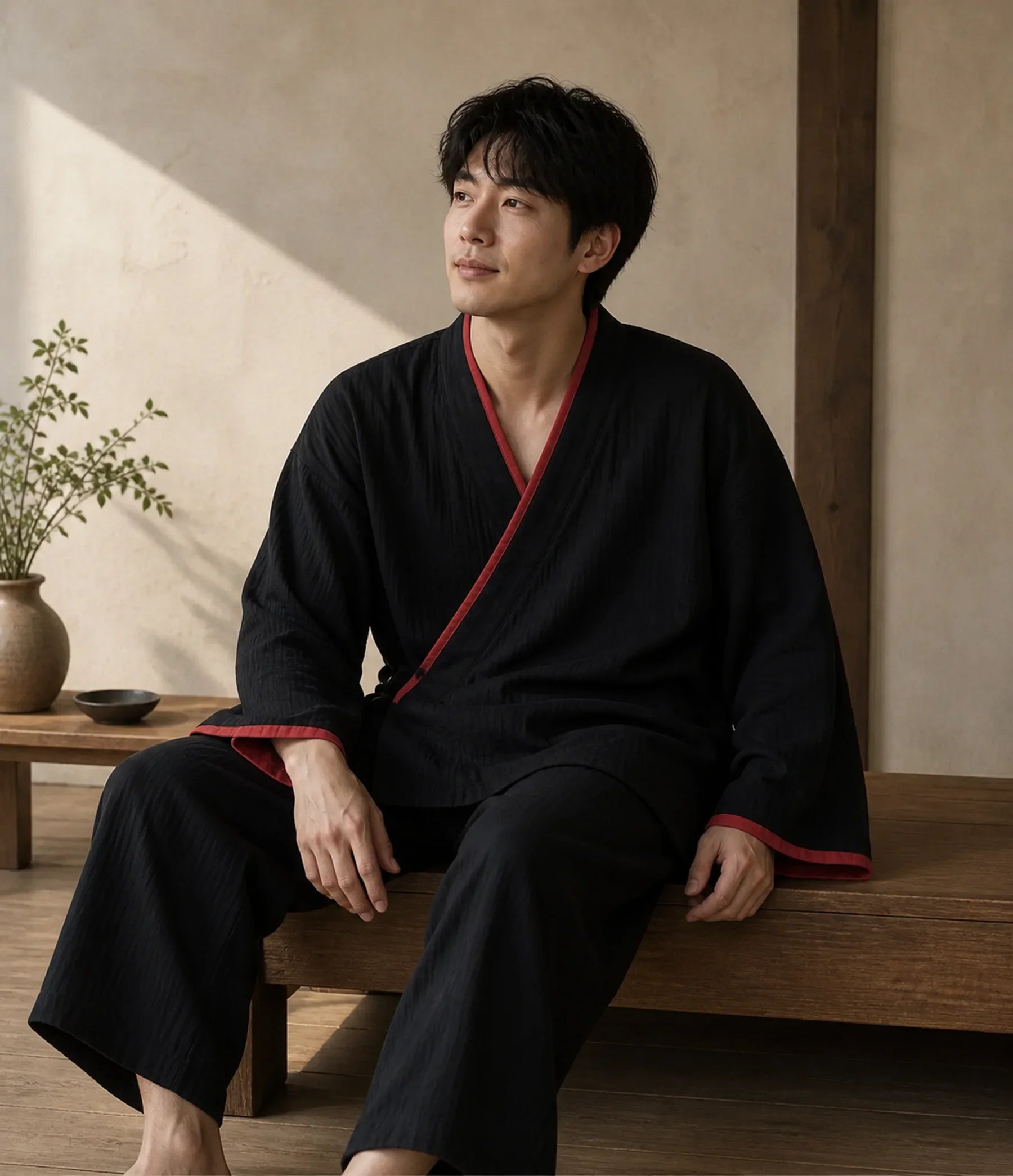
A samue jacket can work well as part of a coordinated homewear set. In colder rooms, a padded hanten provides more insulation than an unlined haori-style jacket.
Consider where the sleeves finish. Slightly shorter sleeves can be practical when cooking, washing, writing, or working at a desk.
For Work, Crafts, or Studio Use
A noragi-style jacket is often a suitable choice when movement and storage matter.
Useful features include:
- Durable fabric
- Large pockets
- Secure ties
- Reinforced seams
- A hem that does not restrict bending
- Sleeves that remain away from the hands
Cotton canvas and denim can provide structure and durability. Lighter cotton may be more comfortable if the work area is warm.
Check pocket depth rather than simply counting the number of pockets. A shallow decorative pocket may not hold a phone, notebook, or tool securely.
Japanese-inspired clothing is not a replacement for certified protective workwear. Avoid loose ties and wide sleeves around machinery, open flames, chemicals, or other hazards.
For Travel
Travel clothing needs to remain comfortable during long periods of sitting and be easy to combine with different outfits.
A useful travel jacket should be:
- Light enough to carry
- Easy to fold
- Comfortable over a base layer
- Suitable for indoor and outdoor transitions
- Resistant to obvious wrinkling
- Equipped with practical pockets
- Easy to clean after the trip
A reversible jacket can provide two color options without taking up additional luggage space. However, reversible construction may add weight, and not every reversible jacket has secure pockets on both sides.
Before packing, test how the jacket looks after being folded for several hours.
For Cold Indoor Spaces
A padded hanten is designed to retain more warmth than an unlined jacket.
It can be useful in:
- Cool homes
- Studios
- Workshops
- Covered outdoor areas
- Cabins
- Mild winter conditions
The front ties make a hanten easy to put on and remove, but the open neckline and wide sleeves allow some air to enter. It should not be expected to perform like a technical winter coat.
If you regularly move between cold outdoor weather and strongly heated rooms, a lighter jacket worn under a weather-resistant coat may be more adaptable.
For Cultural Events
First determine whether the event calls for traditional Japanese dress or simply welcomes Japanese-inspired fashion.
A modern haori-style jacket worn with jeans is different from a traditional haori coordinated with kimono. A noragi-inspired jacket is also not a substitute for formal kimono clothing.
If the event has a dress code, ask the organizer what is appropriate. Accurate terminology and a clear understanding of the setting are more useful than adding unrelated accessories to make an outfit appear more traditional.
Choose by Climate
Temperature is important, but humidity, wind, rain, and indoor heating can change how a jacket feels.
Hot and Humid Weather
In hot weather, focus on airflow and moisture management.
Look for:
- Lightweight fabric
- An unlined body
- An open front
- Loose sleeves
- Enough room between the fabric and skin
- A light color if you will spend time in direct sun
Linen and cotton-linen blends often feel dry and breathable. Lightweight cotton is also comfortable, although tightly woven cotton can hold more heat than expected.
An oversized jacket is not automatically cooler. If the fabric is heavy, the extra material can add warmth. Consider both the cut and the fabric weight.
Warm Days and Cool Evenings
A lightweight haori-inspired jacket works well when the temperature changes after sunset or between air-conditioned and outdoor spaces.
Choose a fabric that can be folded or carried when not in use. A jacket with an open front is easy to add without changing the rest of the outfit.
Medium and dark colors can be useful for evening wear, while natural or pale colors tend to feel more relaxed during the day.
Mild or Changeable Weather
Medium-weight cotton, textured woven fabric, and light denim can handle a wider range of conditions.
The jacket should have enough room for either a T-shirt or thin knit underneath. This allows you to adjust the outfit without changing the outer layer.
A longer hem provides more coverage, while a shorter jacket may feel easier during active movement.
Cool and Dry Weather
For cool conditions, consider:
- Heavier cotton
- Denim
- Canvas
- A lined jacket
- A lightweight padded hanten
- Space for a sweater underneath
An open-front jacket can work in calm weather but may lose heat quickly in wind. A scarf and warm base layer can improve comfort without changing the jacket.
Cold Weather
A padded hanten provides useful insulation for indoor spaces and light outdoor activity in dry, calm conditions.
Check:
- Insulation material
- Filling thickness
- Garment weight
- Lining
- Hip coverage
- Sleeve openings
- Neckline coverage
For strong wind, heavy rain, snow, or extended exposure, use outerwear designed for those conditions. A traditional-style padded jacket should not be treated as a replacement for weatherproof equipment.
Rainy Conditions
Many cotton, linen, denim, and padded Japanese-style jackets are not waterproof.
Cotton can absorb moisture and take time to dry. Dark denim may transfer dye when wet. Padded garments can become heavy and may develop uneven insulation if they are not dried correctly.
In frequent rain, wear the jacket under a waterproof shell or choose another outer layer. Do not assume that dense fabric is water-resistant.
Understand Fabric Weight
Fiber composition does not tell the whole story. Two jackets labeled “100% cotton” can have completely different thickness, texture, drape, and warmth.
Whenever possible, check the product description for fabric weight or seasonal guidance.
Lightweight Fabric
Lightweight fabric drapes easily and packs well. It is suitable for warm weather, indoor layering, and travel.
Possible disadvantages include:
- Limited warmth
- Less structure
- Greater transparency in pale colors
- More visible wrinkling
- Pockets that cannot support heavy items
Medium-Weight Fabric
Medium-weight fabric is often the most versatile choice. It provides enough structure for pockets and a defined silhouette without becoming difficult to layer.
This weight works well for everyday haori-inspired and noragi-style jackets.
Heavy Fabric
Denim, canvas, and dense woven cotton create a stronger workwear appearance.
Heavy fabric may:
- Feel stiff when new
- Take longer to dry
- Add weight during travel
- Require more shoulder room
- Become uncomfortable in heated indoor spaces
It may also soften and develop character through wear, especially around seams, pockets, elbows, and ties.
Padded Construction
Padding adds warmth but changes the silhouette. A padded jacket needs enough space to contain the insulation without compressing it.
Check whether the filling is cotton, polyester, or a blend. Also confirm whether the jacket can be washed at home, as some padded garments require specialized care.
Choose the Right Material
Cotton
Cotton is comfortable, familiar, and available in many weights. It can be soft or structured depending on the weave.
It may shrink if exposed to high heat, so check whether the garment has been prewashed and follow the care label.
Linen
Linen is breathable and has a naturally textured surface. It softens with wear but wrinkles easily.
Wrinkles are part of linen’s appearance. If you prefer a smooth, formal-looking surface, a linen jacket may require more pressing than you want.
Cotton-Linen Blends
A cotton-linen blend can balance breathability, softness, and texture. The exact result depends on the fiber percentages and weave.
These blends work particularly well for relaxed spring, summer, and early autumn jackets.
Denim
Denim adds structure and workwear character. Dark or raw-looking denim can release dye onto pale clothing and furniture, especially when new or damp.
A denim jacket may also feel warmer and heavier than a product photograph suggests.
Polyester and Blended Fibers
Synthetic fibers can improve wrinkle resistance, color stability, and drying speed. Breathability varies according to the weave and thickness.
Do not judge a garment by the fiber name alone. A well-constructed blend may be more practical for your routine than a natural fabric that requires difficult care.
Check the Lining
A lining changes how the jacket moves over clothing.
A smooth lining makes it easier to put the jacket on over knitwear. An unlined jacket may feel cooler and allow the inside seams to remain visible.
Before buying, determine whether the lining is:
- Full or partial
- Smooth or textured
- Breathable
- Attached securely
- Suitable for the intended season
Reversible jackets deserve extra attention because both sides act as visible outer fabrics. Check the seams, labels, pockets, and closures on each side.
Decide How Much Structure You Want
A soft jacket falls close to the body and creates a relaxed line. A structured jacket keeps its shape and feels more like workwear.
Choose softer construction if you prefer:
- Easy movement
- A cardigan-like layer
- Lightweight travel clothing
- A flowing silhouette
Choose greater structure if you prefer:
- Defined shoulders
- Functional pockets
- A chore-jacket appearance
- Heavier layering
- Fabric that develops visible wear
How Should a Japanese-Style Jacket Fit?
The jacket should provide freedom of movement without constantly slipping, twisting, or getting in the way.
Japanese-inspired jackets often use straight bodies and dropped shoulders. This means they do not fit like tailored blazers.
Chest Width
Compare the garment’s flat chest measurement with a jacket you already wear comfortably.
If the front overlaps, confirm whether the listed width includes that overlap. If the jacket remains open, the front edges do not necessarily need to meet, but the back still needs enough width.
Shoulder Width
A dropped shoulder can be intentional. Instead of requiring the seam to sit directly on the shoulder point, evaluate the complete sleeve reach and how the fabric hangs.
Very wide shoulders can create a relaxed look, but they may also make the sleeves appear longer.
Sleeve Length
Decide where you want the cuff to finish.
Shorter sleeves are practical for work and household activities. Longer sleeves provide more coverage but may interfere with the hands.
Some product pages measure from the center back of the neck to the cuff rather than from the shoulder seam.
Jacket Length
Short jackets work easily with high-waisted or wide-leg trousers. Longer jackets create more coverage and a vertical silhouette.
Check where the hem will fall on your body rather than relying only on the model photograph.
Layering Room
Wear the thickest layer you expect to use when measuring a jacket you already own. This gives you a realistic comparison.
A summer jacket needs less extra room than a jacket intended to fit over knitwear. However, excessive width can make a lightweight garment move around in wind.
Think About Closures
Japanese-style jackets may use:
- An open front
- One or two fabric ties
- An overlapping wrap front
- Small connecting cords
- Buttons
- Hidden snaps
An open front is easy to style but offers limited wind protection. Ties allow some adjustment but should not be used to force a small jacket closed.
Long ties can interfere with machinery, cooking, or physical work. Consider your routine before choosing decorative closures.
Evaluate the Pockets
Pockets can transform a visually appealing jacket into a practical daily garment.
Check:
- Number of pockets
- Opening size
- Pocket depth
- Position on the body
- Whether items cause the fabric to sag
- Whether reversible versions have pockets on both sides
Large patch pockets suit workwear-inspired jackets. Hidden or side-seam pockets create a cleaner appearance but may be harder to access while sitting.
Choose a Useful Color
A jacket that coordinates with clothing you already own will be worn more often.
Neutral choices include:
- Black
- Navy
- Indigo
- Charcoal
- Olive
- Sand
- Natural beige
Patterns and patchwork can become the focus of the outfit. If the jacket contains several colors, identify one or two that already appear in your wardrobe.
Very pale fabrics may show stains more easily during work or travel. Very dark fabrics may reveal lint and fading. Neither is inherently impractical, but both require different care.
Avoid Choosing Only by Product Name
Online terms such as haori, noragi, hanten, and kimono jacket are not always used consistently.
Read the specifications to determine what you are actually buying.
A responsible product page should help you identify:
- Whether the jacket is padded
- Whether it wraps or hangs open
- Whether it is lined
- The exact materials
- The number and type of pockets
- The garment measurements
- The country of manufacture
- Whether the design is traditional or Japanese-inspired
A modern Japanese-inspired jacket can be comfortable and thoughtfully made without being presented as a historical garment.
Online Shopping Checklist
Before placing an order, confirm the following:
- Intended season
- Indoor or outdoor use
- Fabric composition
- Fabric weight
- Lining and insulation
- Front closure
- Chest and shoulder measurements
- Sleeve reach
- Garment length
- Pocket size
- Washing method
- Potential shrinkage
- Potential color transfer
- Number of pieces included
- Return conditions
When comparing a Seapoom Japanese-style jacket with your existing wardrobe, measure a jacket you already like and use those dimensions as your reference. This is more dependable than selecting a size based only on height, weight, or a letter label.
A Simple Decision Guide
Choose a lightweight cotton or linen-blend haori-inspired jacket if you need an open layer for warm or mild weather.
Choose a medium-weight cotton jacket if you want a versatile everyday garment.
Choose denim or canvas noragi-style outerwear if you prefer structure, workwear details, and substantial pockets.
Choose a padded hanten if your main goal is warmth in cool indoor or calm outdoor conditions.
Choose a samue set if you want a coordinated jacket and trousers for home, work, meditation, or relaxed daily activity.
Choose weatherproof technical outerwear instead if you need protection from heavy rain, snow, strong wind, or hazardous working conditions.
Final Thoughts
Choosing a Japanese-style jacket is easier when you begin with climate and routine rather than color or product name.
Think about where you will wear it, what you will put underneath, how much warmth you need, and whether features such as pockets, ties, reversible construction, or washable fabric will make a genuine difference.
Then examine the measurements and materials closely. A jacket that suits your weather, movement, and existing wardrobe is more likely to become a regularly used layer rather than an item that remains in storage.
Frequently Asked Questions
What is the best Japanese-style jacket for warm weather?
An unlined jacket made from lightweight cotton, linen, or a cotton-linen blend is usually a practical choice. Look for an open front, breathable fabric, and enough room for air to circulate without choosing unnecessary fabric weight.
Which Japanese-style jacket is best for winter?
A padded hanten can provide comfortable warmth indoors and during light outdoor activity in dry, calm weather. For strong wind, heavy rain, snow, or extended outdoor exposure, use a weather-resistant winter coat instead.
How do I choose the right size when buying online?
Compare the listed chest width, shoulder width, sleeve reach, and length with a jacket you already own and wear comfortably. Include the clothing you plan to layer underneath, and do not rely only on labels such as small, large, or one size.

Leave a comment
This site is protected by hCaptcha and the hCaptcha Privacy Policy and Terms of Service apply.