

Samue is a Japanese two-piece outfit made up of a wrap-front jacket and relaxed trousers. Its straight construction, adjustable ties, and roomy fit allow the wearer to sit, bend, walk, and work comfortably.
The clothing is traditionally associated with the practical duties performed by Zen Buddhist monks. Over time, samue also became familiar among craftspeople, artists, gardeners, and other people who needed clothing that allowed movement without unnecessary decoration.
Modern samue are worn in a wider range of settings. Some people use them for work or meditation, while others choose them as homewear, travel clothing, or an alternative to conventional loungewear.
Although a samue jacket may resemble the upper part of a kimono, samue is not a shortened kimono. It is a separate type of clothing designed around practical activity.
What Does Samue Mean?
Samue is written 作務衣 in Japanese.
The first part, samu, refers to physical work or daily duties, particularly tasks carried out in a Zen temple. The final character refers to clothing.
This background explains the garment’s practical character. Samue was associated with work such as cleaning, maintaining temple grounds, carrying materials, and completing other everyday responsibilities.
Samue should not be confused with formal Buddhist robes. It was clothing for work rather than ceremonial dress. Modern associations with meditation come partly from its temple background and partly from the freedom of movement provided by its construction.
What Does a Samue Set Include?
A complete samue set normally contains two coordinated pieces:
- A wrap-front jacket
- A pair of loose trousers
However, product listings are not always consistent. Some stores sell the jacket or trousers separately, so shoppers should confirm the number of pieces before ordering.
The Samue Jacket
The upper garment usually has a straight body and an overlapping front. Fabric ties hold the jacket in place without buttons or a zipper.
Common features include:
- A V-shaped neckline created by the wrap front
- An inner tie that secures the first panel
- An outer tie at the side or waist
- Straight or dropped shoulders
- Wide sleeves
- A hip-length hem
- One or more practical pockets
The left front panel is normally worn over the right front panel. This follows the conventional wrap direction used in Japanese clothing.
Not every modern jacket is constructed in exactly the same way. Some have only one visible tie, while others use concealed fasteners, elastic details, or a more open front.
Samue Trousers
Samue trousers are designed to provide room through the seat, hips, and legs.
The waistband may use:
- A drawstring
- Elastic
- A combination of elastic and a drawstring
- Traditional ties
Some trousers have straight hems. Others include elastic, drawstrings, or ties around the ankles. A narrower ankle can help keep the trouser leg away from the feet during work.
Pockets vary considerably. Before buying a set for practical use, check whether the trousers have side, back, or cargo-style pockets and whether they are deep enough for the items you normally carry.
The Traditional Purpose of Samue
Samue developed as practical work clothing rather than formal dress.
The loose cut allowed the body to move during repetitive tasks. The wrap jacket could be adjusted at the waist, and the separate trousers were easier to work in than a full-length robe.
This function is an important part of the garment’s identity. The simplicity of samue was not originally a fashion statement. It reflected the need for clothing that did not interfere with daily responsibilities.
Today, the same features remain useful even when the wearer is not performing temple work.
How Samue Is Used Today
Modern samue can be worn in several ways, depending on its fabric, construction, and appearance.
Homewear
Soft cotton samue work well as relaxed clothing at home. The separate trousers provide coverage and freedom of movement, while the wrap jacket can be loosened or adjusted as needed.
Samue can be especially practical for reading, cooking, light household tasks, or spending a quiet day indoors.
Craft and studio work
Artists, potters, woodworkers, calligraphers, and other craftspeople may appreciate the roomy construction and practical pockets.
For active work, choose sleeves and trouser hems that remain clear of tools, clay, ink, water, or moving equipment.
Gardening and light outdoor work
A durable cotton set can support bending, kneeling, and walking. Dark colors may show soil and stains less easily than pale fabrics.
Samue is not protective work equipment, however. It should not replace clothing designed for hazardous machinery, chemicals, extreme weather, or high-visibility requirements.
Meditation and quiet practice
The loose seat and trousers can make sitting more comfortable. Choose a fabric that does not feel restrictive behind the knees or around the waist.
Samue may be suitable for personal meditation or informal practice, but it is not a substitute for formal robes required by a particular temple, school, or ceremony.
Casual clothing
Contemporary samue can be worn outside the home when the fabric and construction resemble casual daywear. Structured cotton, linen blends, solid colors, and well-finished seams generally look more appropriate outdoors than very thin sleepwear fabrics.
Travel
An adjustable waistband and relaxed jacket can make samue comfortable for long periods of sitting. Pockets are useful, but valuables should be kept in secure closures rather than loose open pockets.
Check how easily the fabric wrinkles before selecting a set for travel.
Is Samue a Type of Kimono?
Samue and kimono share features such as straight seams and overlapping fronts, but they are different garments.
A kimono is a full-length wrap garment secured with an obi. Depending on the type and occasion, traditional kimono dressing may involve underlayers, cords, socks, sandals, and several accessories.
Samue is a two-piece outfit with a short wrap jacket and trousers. It uses simple ties and does not require an obi.
The practical difference is easy to see:
- Kimono creates a full-length wrapped silhouette.
- Samue separates the upper and lower body for easier movement.
Calling samue a “kimono set” may help unfamiliar shoppers understand the visual style, but “samue” is the more accurate name.
Samue vs. Jinbei
Samue and jinbei are both relaxed Japanese two-piece outfits, but they are normally associated with different seasons and construction.
Samue usually has longer sleeves and full-length trousers. It can be made in different weights for use throughout the year.
Jinbei is primarily warm-weather clothing. A typical jinbei has short sleeves and shorts or cropped trousers. Small openings or loosely connected sections around the sleeve and body may improve ventilation.
In simple terms:
- Samue usually provides more coverage.
- Jinbei is generally designed for hot summer conditions.
There are modern variations in both categories, so sleeve length, trouser length, and fabric weight should be checked before buying.
Samue vs. Pajamas
Samue can be used as loungewear, but it is not necessarily the same as a pajama set.
Pajamas are designed mainly for sleeping. Their fabric, seams, waistbands, and closures are selected with bed comfort in mind.
Samue developed as work clothing. It may have stronger fabric, more structured seams, firmer ties, and larger pockets. These details can be useful during the day but may feel bulky when sleeping.
A soft, lightweight samue may work for both lounging and sleep. A heavy sashiko-style weave or structured cotton set may be better suited to daytime wear.
Samue vs. Noragi
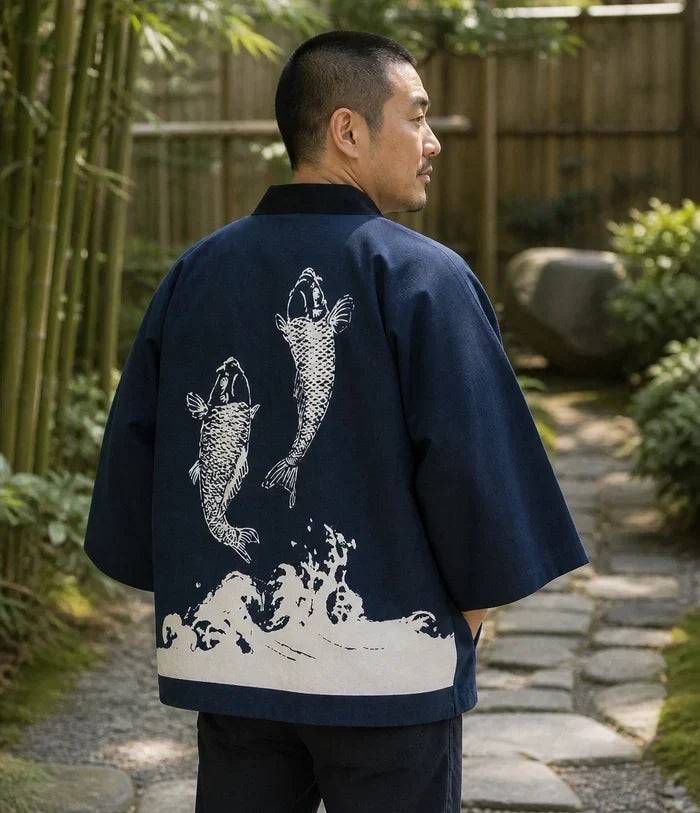
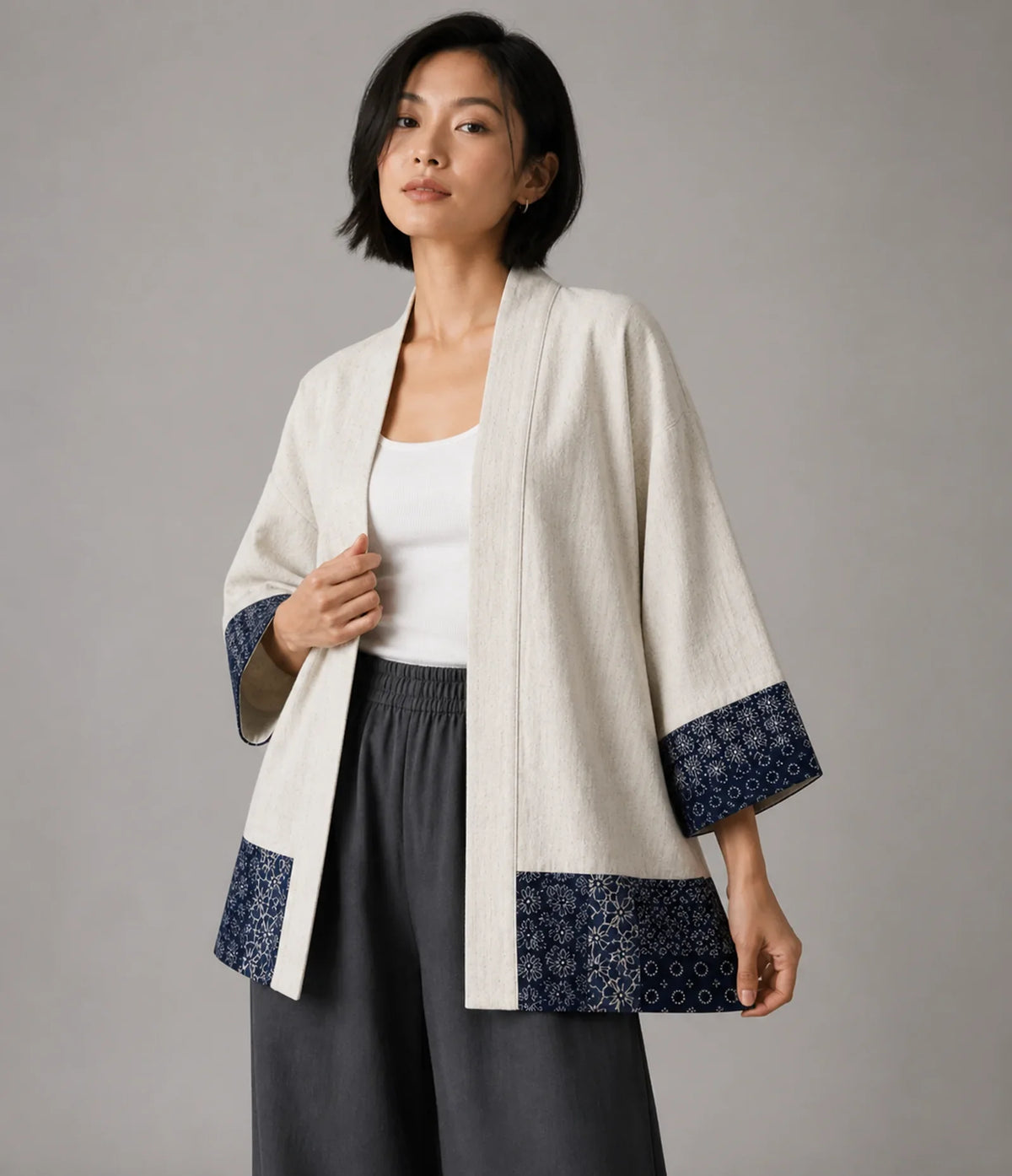
Noragi refers broadly to Japanese field and work clothing rather than one standardized outfit. Modern noragi-style products are often sold as individual jackets.
Samue usually refers to a coordinated two-piece set with a wrap jacket and trousers.
The two categories share practical roots and may use similar cotton fabrics, ties, pockets, and relaxed proportions. A contemporary jacket could therefore be described as samue-inspired or noragi-inspired depending on its construction.
The number of pieces is a useful distinction:
- A noragi-style product is often a separate outer jacket.
- Samue normally includes both a jacket and trousers.
How Should Samue Fit?
Samue should feel relaxed, but it should not be so large that the ties, sleeves, or trouser hems interfere with movement.
The jacket needs enough width for the front panels to overlap comfortably. If the body is too narrow, the neckline may pull open and the ties may sit under excessive tension.
The trousers should allow comfortable sitting, squatting, and bending without pulling across the hips or knees.
Samue Jacket Measurements
Chest width
Compare the flat chest measurement with a loose shirt or wrap jacket you already own.
A samue jacket needs sufficient width for the front overlap. Do not compare it only with the body measurement of a fitted T-shirt.
Jacket length
Most samue jackets finish around the hip. A longer jacket provides more coverage, while a shorter style may feel less restrictive when sitting or bending.
Shoulder width
Some designs have dropped shoulders, meaning the shoulder seam sits beyond the natural shoulder point. This is often intentional.
Check the overall sleeve reach if the garment does not use conventional Western shoulder construction.
Sleeve length and opening
Sleeves may finish above the wrist to keep fabric away from the hands during work. If you prefer full wrist coverage, review the measurements rather than relying on product photographs.
Samue Trouser Measurements
Waist
Elastic and drawstring waists cover a range of measurements, but that range has limits.
Check both the relaxed and stretched waistband measurements when available. The stretched measurement should not be treated as the ideal everyday fit because constantly wearing elastic at its maximum extension can feel uncomfortable.
Hips and seat
The trousers should provide room for sitting and bending. Compare the hip measurement with relaxed trousers rather than slim jeans.
Rise
The front and back rise affect how the trousers sit at the waist and how much space they provide through the seat. A rise that is too short may pull when sitting.
Inseam
Some samue trousers are intentionally shorter than conventional Western trousers. Check where you want the hem to finish, especially if the trousers have ankle ties or elastic cuffs.
Thigh width
This measurement matters if you have muscular legs or want to use the set for activities involving kneeling or squatting.
Choosing Samue Fabric by Season
Lightweight cotton
Light cotton is breathable and comfortable in mild or warm conditions. It is suitable for homewear and light activity, although pale or very thin fabric may be less appropriate for public wear.
Medium-weight cotton
Medium-weight cotton offers a useful balance between breathability, structure, and durability. It can work across several seasons depending on what is worn underneath.
Textured woven cotton
Fabrics with a visible woven texture can feel more substantial and may hide minor wrinkles. Some textured weaves are marketed as sashiko-style, but decorative texture should not automatically be described as traditional hand-stitched sashiko.
Cotton-linen blends
Linen improves airflow and creates a dry, textured surface. It also wrinkles naturally. Cotton in the blend can add softness and make the garment easier to handle.
Heavy cotton
Dense cotton works well in cool weather and for practical daytime use. It may feel too warm for summer or heated indoor spaces.
Polyester and blended fabrics
Synthetic fibers can improve wrinkle resistance, durability, and drying speed. Comfort depends on the weave and fabric weight, not only the fiber percentage.
Silk
Silk samue are available, but they require more careful handling and are not always the best choice for messy work or frequent washing. Check the care instructions before purchasing.
How to Put On a Samue Set
Begin with the trousers.
Adjust the waistband so it feels secure without pressing tightly into the abdomen. If the trousers have ankle ties, fasten them comfortably rather than pulling them so tight that they restrict circulation.
Next, put on the jacket.
Place the right front panel against the body first. Bring the left panel over the right, following the conventional left-over-right direction.
Secure the inner tie if the jacket includes one. Then fasten the outer tie at the side or waist.
The neckline should form a clean V without pulling open or pressing against the throat. Adjust the overlap and ties until the jacket remains secure during normal movement.
The ties are intended to hold the jacket in position, not compress the waist.
What to Wear Under Samue
The appropriate base layer depends on the fabric, temperature, and setting.
In warm weather, a lightweight undershirt can absorb perspiration and reduce how often the outer jacket needs to be washed.
In cool weather, add:
- A long-sleeve base layer
- A thin thermal shirt
- A lightweight knit
- Warm socks
- A haori or padded hanten over the set
Choose a neckline that remains hidden if you want the wrap front to look clean. A visible crew-neck shirt creates a more casual appearance.
Shoes to Wear with Samue
For home use, samue can be worn with socks, slippers, or comfortable indoor footwear.
For casual outdoor use, simple shoes usually work best. Options include:
- Minimal sneakers
- Canvas shoes
- Slip-on shoes
- Plain leather shoes
- Practical sandals in warm weather
Traditional footwear can be appropriate in certain settings, but it is not required for every modern samue outfit.
Consider trouser length when choosing shoes. Cropped or tied hems reveal more of the footwear and ankle, while full-length trousers create a more familiar casual silhouette.
How to Choose Samue Online
Before ordering, check:
- Whether the listing includes both jacket and trousers
- Jacket chest width and length
- Trouser waist, hip, rise, and inseam
- Sleeve and trouser hem construction
- Fabric composition
- Fabric thickness
- Pocket number and placement
- Whether the garment is lined
- Whether the color may transfer
- Washing and drying instructions
- Country of manufacture
“One size” does not mean that the garment fits every body. It means that one garment size is being offered. Always compare the measurements with clothing you already wear comfortably.
When considering a Seapoom samue set, pay particular attention to the jacket overlap and the relaxed and stretched waistband measurements. These two areas have the greatest effect on everyday comfort.
How to Care for Samue
Care requirements depend on the fabric and dye, so follow the garment label first.
General practices include:
- Wash dark colors separately during the first few washes.
- Secure long ties before machine washing.
- Use a laundry bag when recommended.
- Select cool water and a gentle cycle.
- Avoid bleach unless the label permits it.
- Do not overload the washing machine.
- Limit high-speed spinning for lightweight fabric.
- Reshape the jacket and trousers before drying.
- Air dry away from strong direct sunlight.
- Avoid tumble drying unless specifically allowed.
Dark indigo or heavily dyed fabric may release color when new. Keep it away from pale furniture, bags, and clothing when damp.
Wash the jacket and trousers together when possible. Washing one piece much more frequently than the other can cause uneven fading between the two.
How to Store a Samue Set
Make sure both pieces are fully dry before storage.
Fold the jacket and trousers neatly and keep them together. This prevents one part of the set from being misplaced and helps both pieces experience similar storage conditions.
Choose a dry space with airflow. In humid climates, inspect stored clothing periodically for odor or moisture.
Avoid hanging heavy knit or loosely woven samue for long periods if the weight could stretch the shoulders. Folding is often the safer option.
Wearing Samue Respectfully
People from different backgrounds can wear samue as practical clothing.
Respectful use begins with understanding what it is. Samue has roots in work and daily temple duties; it is not a costume and should not automatically be presented as a formal meditation robe.
It is also important to describe modern products accurately. A samue-inspired set manufactured outside Japan can still be comfortable and thoughtfully made, but it should not be labeled “Made in Japan” unless that statement is true.
Simple, functional styling usually reflects the character of samue better than exaggerated cultural accessories.
Final Thoughts
Samue is a practical two-piece Japanese outfit built around comfort and movement. Its wrap-front jacket and relaxed trousers make it easier to work, sit, walk, and rest without the complex dressing requirements of kimono.
The garment’s use has expanded beyond its temple-work origins. Today, samue can serve as craft clothing, homewear, meditation clothing, casual daywear, or comfortable travel attire.
When choosing a set, focus on fabric weight, jacket overlap, trouser measurements, pockets, and care requirements. These details determine whether the samue will suit your routine more reliably than labels such as “one size” or “kimono pajamas.”
Frequently Asked Questions
Is samue the same as kimono?
No. Kimono is a full-length wrap garment normally secured with an obi. Samue is a two-piece outfit consisting of a short wrap-front jacket and trousers, designed for easier movement and everyday activity.
What is the difference between samue and jinbei?
Samue usually has longer sleeves and full-length trousers and can be worn in different seasons. Jinbei generally has short sleeves and shorts or cropped trousers, making it more suitable for hot summer weather.
Can samue be worn as pajamas?
A soft, lightweight samue can be comfortable for lounging or sleeping. However, heavier sets with structured fabric, firm ties, or large pockets may be better suited to daytime wear than use in bed.

Leave a comment
This site is protected by hCaptcha and the hCaptcha Privacy Policy and Terms of Service apply.